
There is something especially dear to me about a home that makes do beautifully, and this converted off-grid bus does exactly that. Parked in a quiet natural setting and dressed in a warm, practical palette, it carries the spirit of simple country living into a compact footprint without ever feeling skimpy or cold. I’m always drawn to spaces that know who they are, and here that confidence shows up in every painted panel, every hardworking built-in, and every soft pool of lamplight.
Though this is a concept design, it feels rooted in the kind of honest living I’ve known all my life: thoughtful, resourceful, and full of comfort. What makes it special is not only the clever use of space, but the way sustainability has been folded into the design with such grace. Solar power, smart storage, durable natural materials, and a layout that supports daily rhythms all come together in a home that feels less like a novelty and more like a place where a person could truly settle in.
Exterior
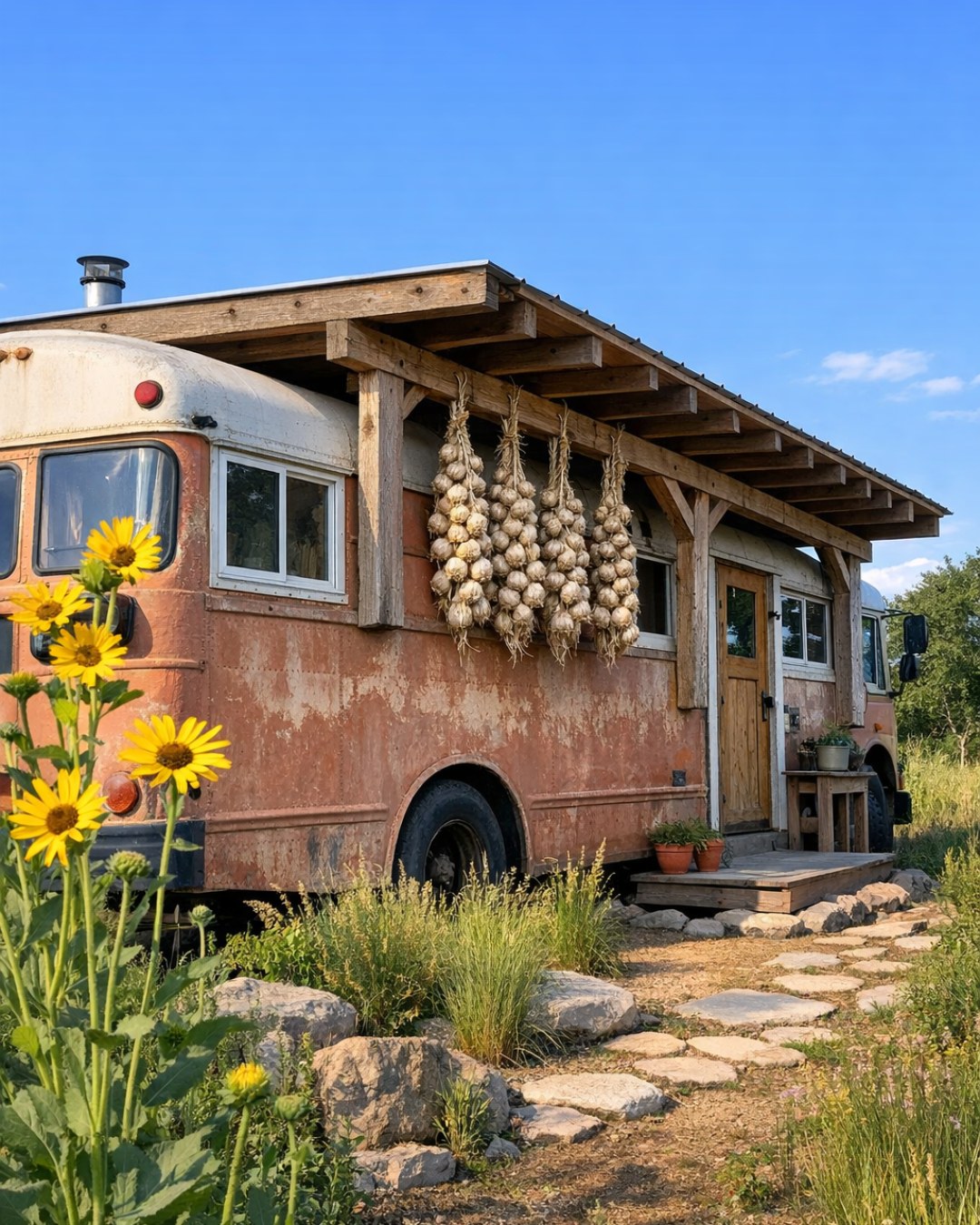
From the outside, the bus keeps much of its original character, but it has been softened and elevated with a restrained, cottage-minded touch. The body is finished in a muted, earthy tone—something between sage, cream, and weathered gray—that sits comfortably against a rural backdrop. Matte black window frames and hardware give it a bit of structure, while natural wood accents at the entry steps and roof rack keep the whole composition from feeling too industrial. I can just imagine muddy boots on those steps after an evening walk, and that is always a good sign to me; a home should welcome real life.
The off-grid features are integrated in a way that feels tidy rather than technical. Low-profile solar panels sit neatly along the roofline, and exterior storage compartments are blended into the design so they don’t interrupt the bus’s clean silhouette. A simple retractable awning extends the living space outdoors, creating the kind of shaded perch where coffee in the morning or cornbread and stew at dusk would feel exactly right. The overall impression is one of quiet capability—humble, handsome, and prepared.
Living Room
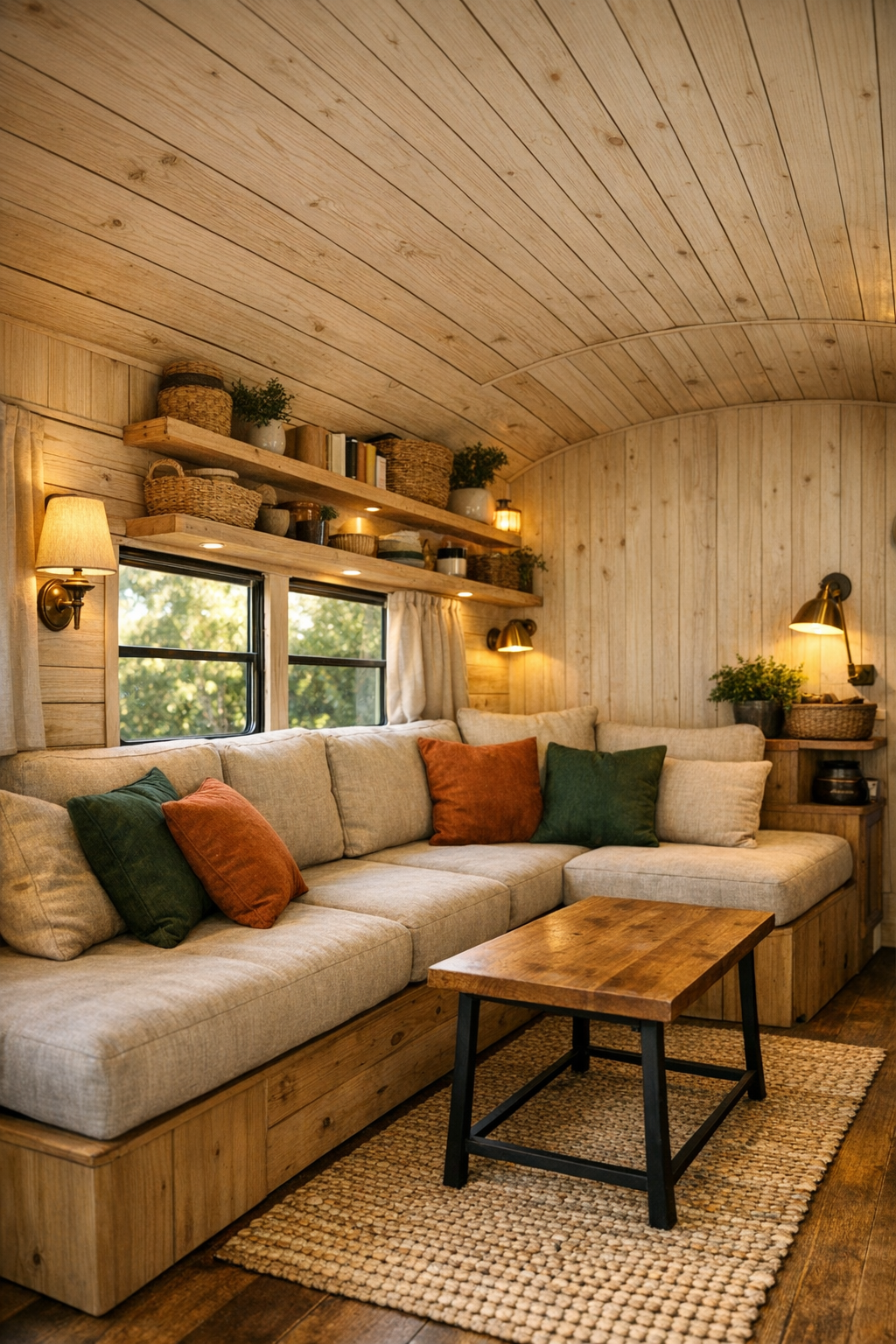
The living area is proof that small spaces can still have a full heart. A built-in bench sofa runs along one side beneath the windows, upholstered in warm oatmeal linen with deep green and rust-toned cushions that echo the colors of field grass, clay soil, and old barn wood. The walls and ceiling are lined in pale wood planks, which brighten the narrow footprint and give the room that familiar, handmade coziness I associate with cabins and farmhouse porches. Nothing is oversized, yet nothing feels starved either; the proportions are carefully considered, with just enough breathing room between each piece.
A small wood-topped table, a woven rug underfoot, and open shelving with pottery, books, and neatly tucked baskets add layers of daily usefulness. Lighting does much of the emotional work here: wall sconces with soft brass finishes, warm LED strips tucked under shelves, and generous daylight from the original bus windows. I appreciate how the textures keep the room from becoming too polished—there is grain, weave, canvas, and brushed metal everywhere you look, and together they create a living room that feels genuinely settled in.
Dining Room
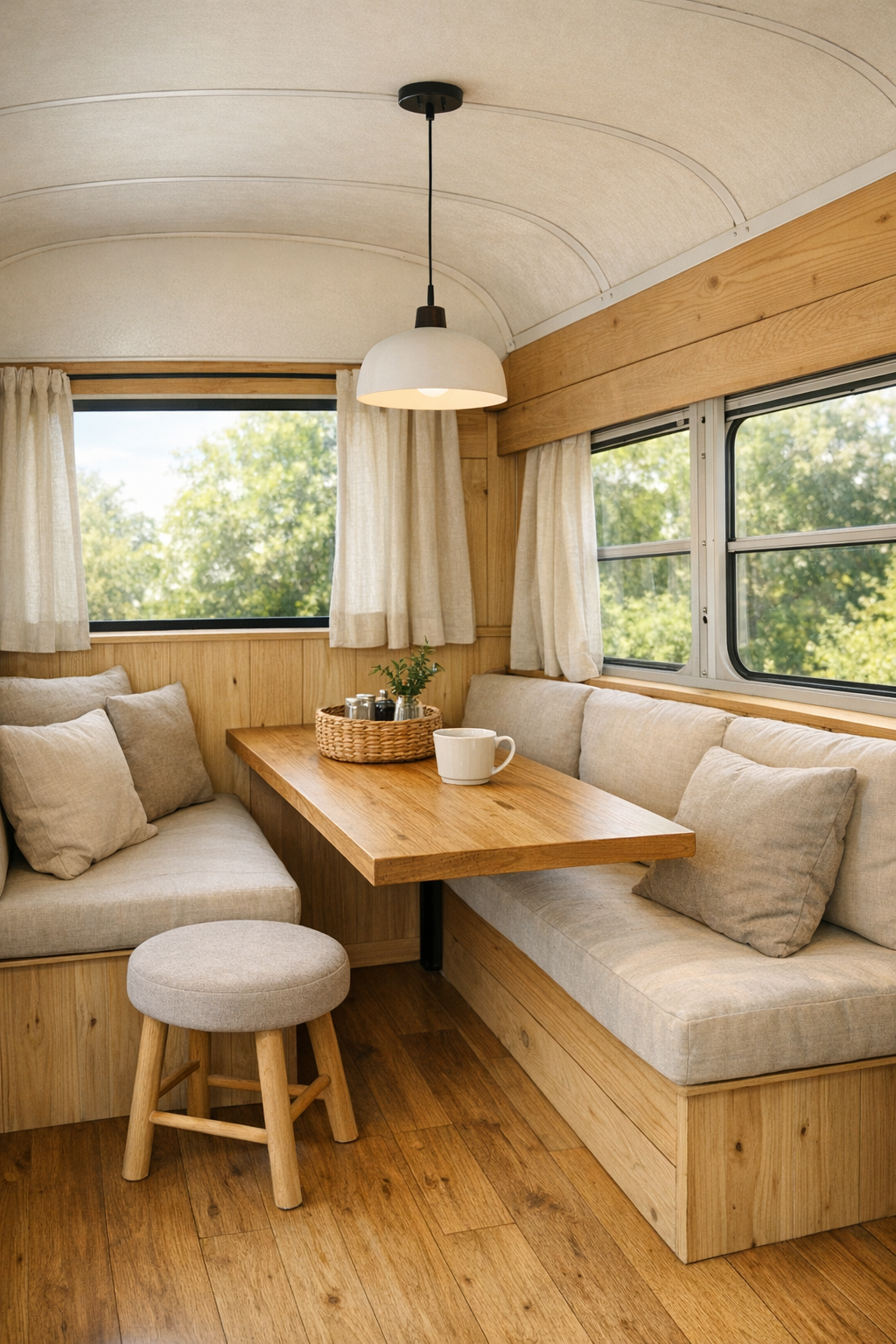
In a home like this, the dining area has to earn its keep, and this one does so gracefully. A slim built-in table is set beside the windows, paired with a bench on one side and a compact chair or stool that can be moved where needed. The wood top has a softly matte finish that looks durable enough for everyday meals, card games, or a laptop in the afternoon, and the base cabinetry beneath adds hidden storage without visual heaviness. I’ve spent enough years around busy kitchens to know that a table becomes the center of things no matter its size, and this one clearly understands that assignment.
The styling is simple but thoughtful: a small ceramic vase, a linen runner, and seat cushions in faded, homespun colors that nod to quilt patterns without becoming overly sweet. Overhead, a modest pendant in blackened metal or opal glass brings intimacy to the zone and marks it as its own little room within the larger bus layout. Because it sits so close to the windows, the dining space never feels pinched; instead, it feels like a breakfast nook on wheels, cheerful and companionable.
Kitchen
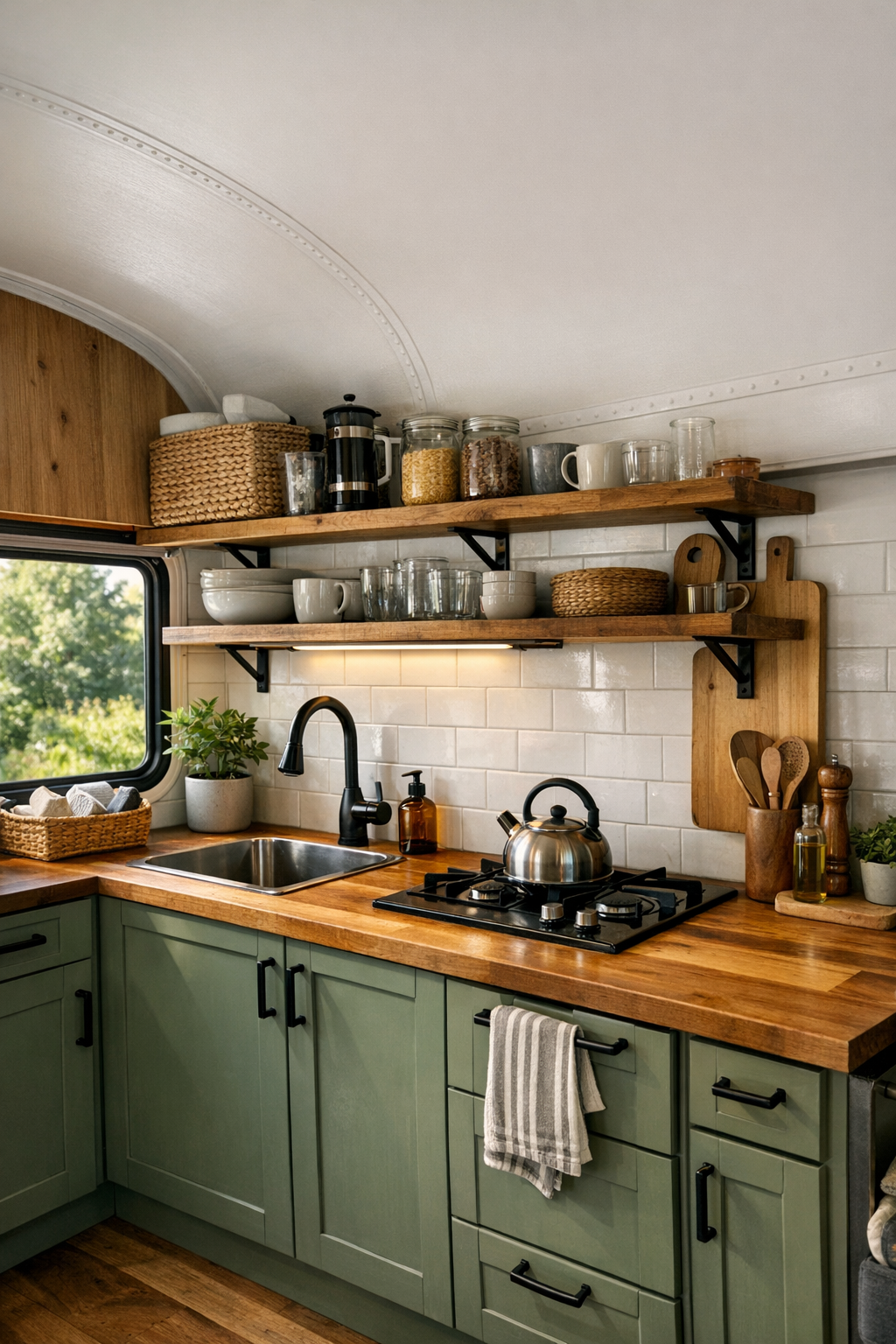
The kitchen is, to my eye, the real triumph of the bus. It is narrow, yes, but beautifully arranged, with one efficient run of cabinetry and open shelves that keep necessities close at hand. Cabinet fronts in a soft muted green or creamy mushroom tone are paired with butcher-block counters, white tile or enameled metal backsplash surfaces, and sturdy black pulls. There is a pleasing old-fashioned honesty to those materials. They are not fussy, but they are handsome, and they age with dignity, which matters in a hardworking space.
Every inch seems to have been considered from a cook’s point of view: a compact sink under a window, a two-burner cooktop, a small oven or combination unit, magnetic knife storage, hooks for mugs and utensils, and drawers fitted for dry goods and tools. I especially like the balance between open display and closed storage, which keeps the kitchen from feeling cluttered while still letting everyday objects contribute to the charm. It feels like a place where soup could simmer, biscuits could bake, and supper could come together without anyone bumping elbows too much.
Bedroom
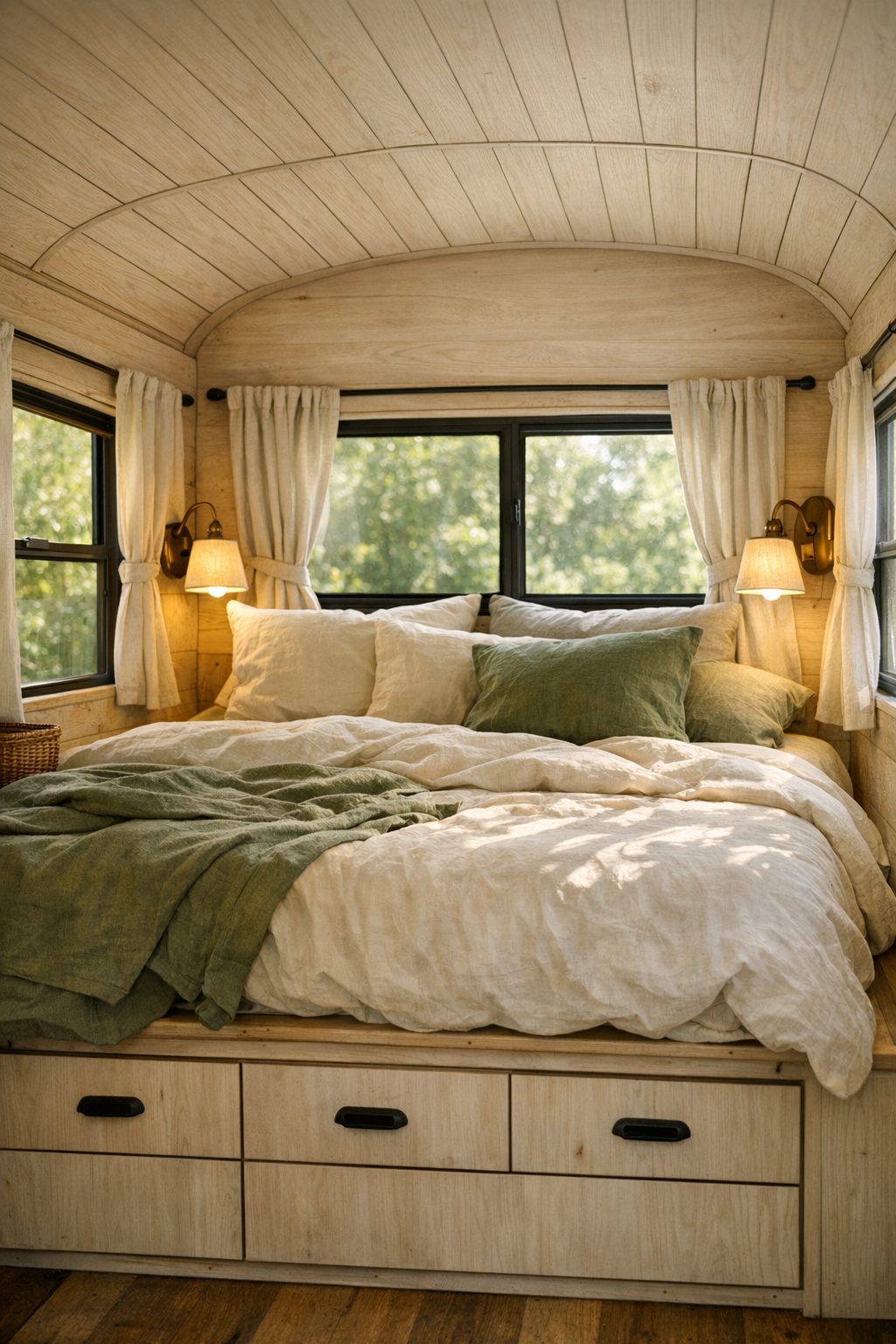
The bedroom, tucked toward the rear, has the quiet, tucked-away feeling of a sleeping porch or attic room, and that softness suits it beautifully. The bed platform is integrated into the architecture, with storage drawers below and shelving along the sides so the footprint stays efficient. Bedding in washed cotton and linen—creams, soft grays, faded olive, perhaps a rust-colored throw at the foot—brings depth without noise. I often think the best bedrooms are the ones that whisper rather than shout, and this one certainly does.
Windows placed at just the right height keep the room connected to the outdoors while preserving a sense of enclosure, and simple curtains in natural fabric filter the light gently. A pair of reading sconces, pale wood paneling, and a little ledge for books or a cup of tea make the space feel personal instead of merely functional. Even in such a compact home, the bedroom manages to feel restorative, which is no small feat. It offers the kind of calm that invites an early bedtime and an easy morning.
Bathroom
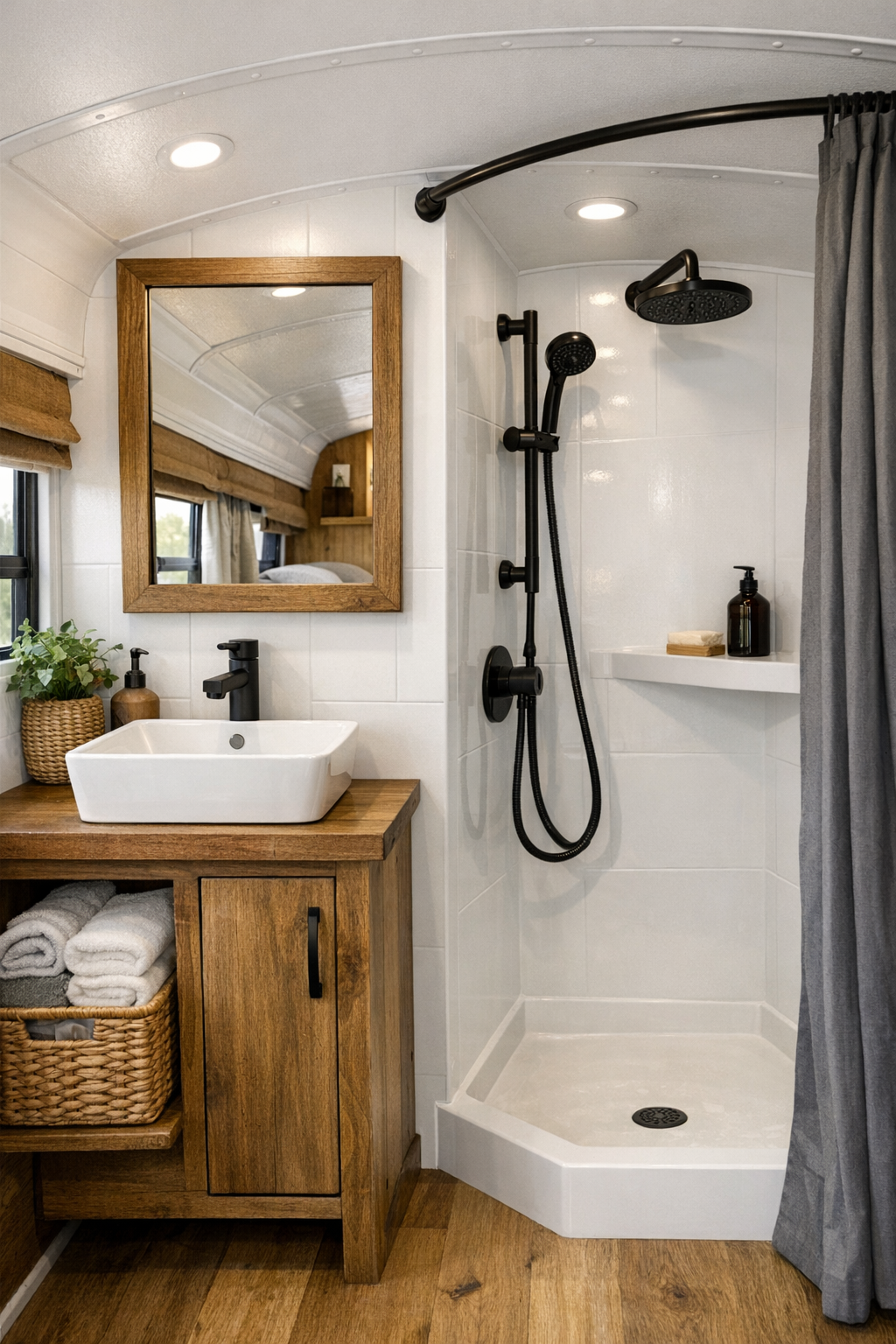
The bathroom is compact, as one would expect, but it has been handled with uncommon care. A small vanity in natural wood or painted cabinetry anchors the space, topped with a simple basin and durable counter surface. The shower is lined in crisp white tile or waterproof wall panels that reflect light nicely, and dark fixtures provide a little contrast and definition. In small rooms, I always look for restraint, and this bathroom has it; nothing feels crowded with unnecessary detail.
What keeps it inviting is the texture and warmth brought in through practical choices: a woven basket for towels, a mirror with a thin wood frame, brushed metal hooks, and perhaps a tiny shelf for soap and a trailing plant. Good lighting is essential in a bathroom this size, and here it appears soft but clear, flattering without dimness. The room feels clean, efficient, and grounded—more like a thoughtfully designed bath in a cottage than a compromise forced by tight dimensions.
Other Areas
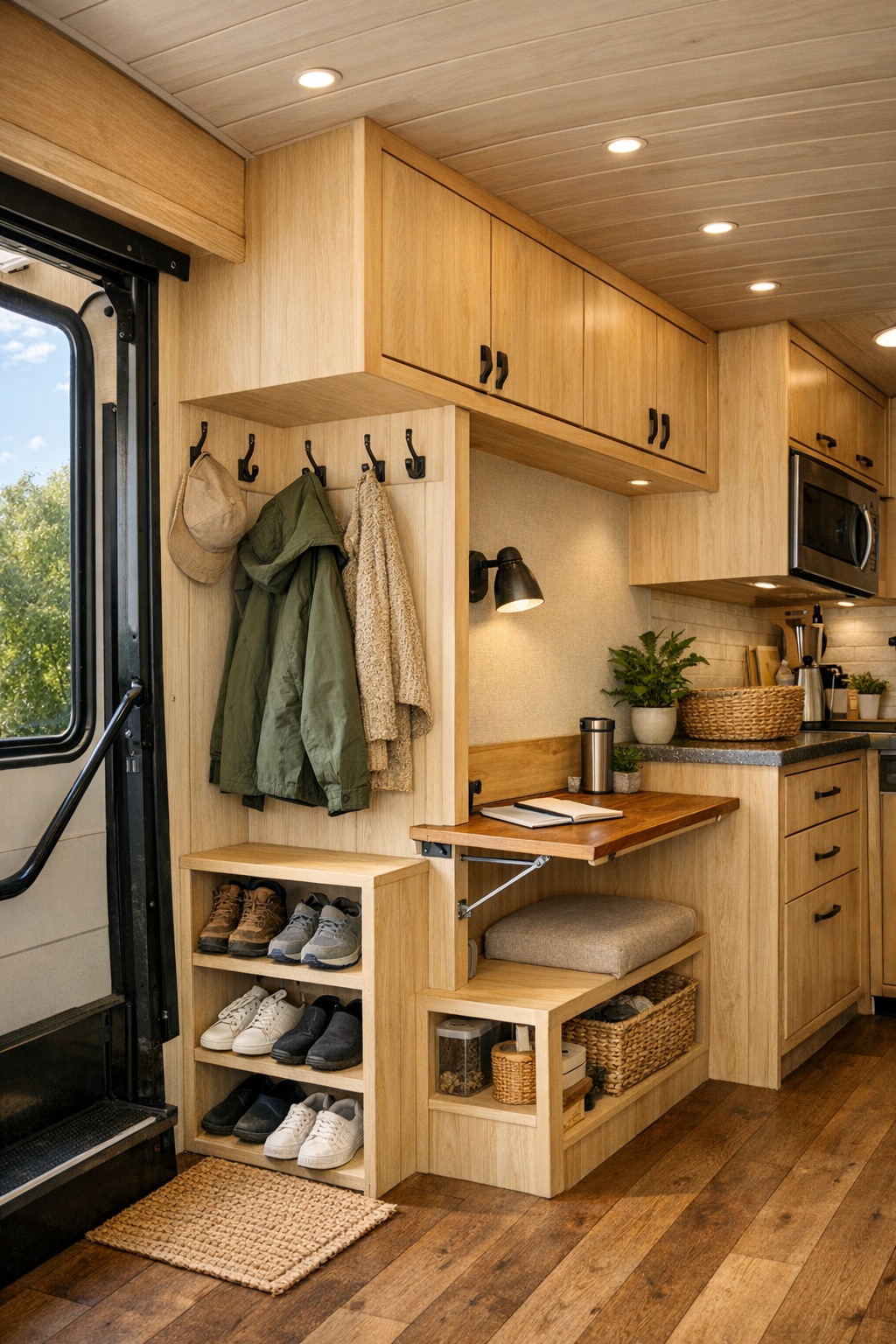
Some of the loveliest moments in this bus are in the in-between spaces. The entry is likely fitted with a compact drop zone—hooks for jackets, a cubby for shoes, perhaps a narrow bench or step with hidden storage beneath. Overhead cabinetry follows the curve of the bus and turns what could have been awkward dead space into something genuinely useful. I have always admired homes that respect everyday clutter enough to plan for it, and this one seems to understand that tidiness is often born from generosity, not strictness.
There are probably also small work surfaces and flexible corners that make the bus feel adaptable from morning to evening: a fold-down desk, a reading perch, utility storage for off-grid systems, and neatly integrated compartments for water and power equipment. What impresses me is that these hardworking elements are not treated as afterthoughts. They are woven into the visual language of the home through matching finishes, consistent hardware, and a clear sense of rhythm, making even the practical zones feel warm and considered.
Why You'd Live Here
You would live here if you believe comfort has more to do with intention than square footage. This bus offers a slower, lighter way of living without giving up beauty, and that balance is harder to achieve than it looks. It invites a person to keep only what matters, to use things well, and to let natural light, good materials, and thoughtful routines do much of the decorating.
I think, too, you would choose this home if you wanted independence wrapped in warmth. The off-grid systems promise self-sufficiency, but the design never lets practicality overpower the pleasure of daily life. In the end, that is what lingers with me most: not the cleverness of the conversion, though there is plenty of that, but the way it feels ready to hold ordinary days with real grace.