
There is something instantly comforting about a home that knows exactly what it wants to be, and this converted bus leans fully into a rustic, off-grid spirit without sacrificing beauty. Set within a green summer homestead, it feels tucked into the landscape rather than dropped onto it, with weathered wood, soft linen tones, black metal accents, and sun-warmed textures creating a mood that is equal parts practical and deeply inviting. Even before stepping inside, I can imagine the rhythm of family life here: muddy shoes by the door, herbs drying near an open window, and supper simmering while the evening light settles across the fields.
What makes this place especially memorable is how thoughtfully every inch has been handled in this concept design. Instead of treating the bus like a novelty, the layout embraces it as a real home, layering storage, seating, sleeping, and cooking areas in a way that feels calm, intentional, and surprisingly generous. It has that rare quality I always love in small spaces: nothing feels wasted, and yet nothing feels too precious to actually live in.
Exterior
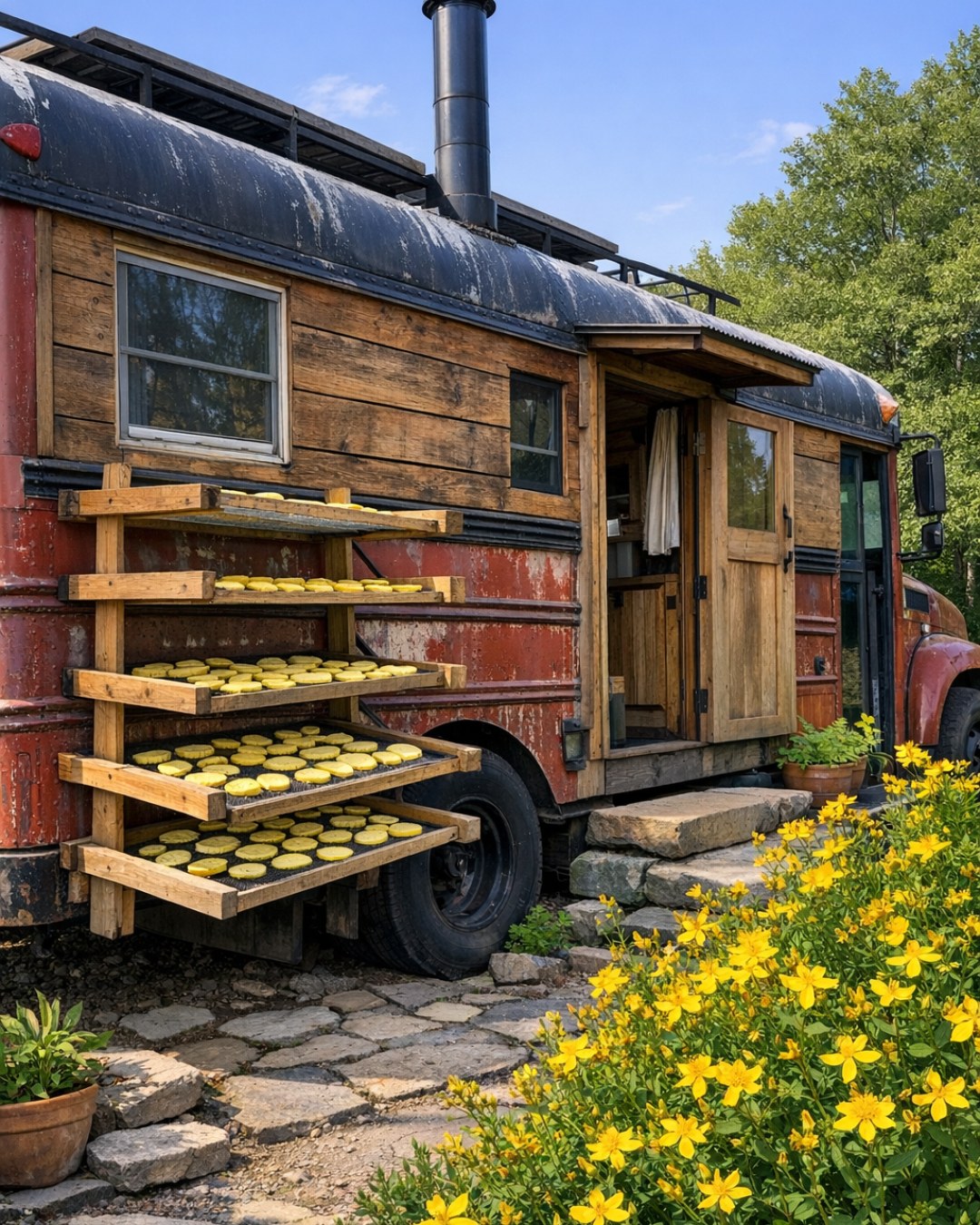
From the outside, the bus keeps enough of its original silhouette to preserve its character, but the finish has been softened into something that feels handcrafted and at home in the countryside. The body is painted in a muted, earthy cream with matte black trim, and portions of the lower panels are clad in reclaimed wood that gives the whole structure warmth and texture. Potted herbs, a gravel path, and a simple timber deck extend the bus into the surrounding homestead, making it feel less like a vehicle and more like a cottage that just happens to have wheels underneath.
I especially like the way the setting does some of the design work here. Tall grass, garden beds, a clothesline, and a few shade trees create a lived-in backdrop that softens the bus’s narrow shape and makes the home feel rooted. Solar panels and rainwater collection are integrated with a quiet practicality rather than put on display, which keeps the overall impression peaceful and unfussy. It is rustic in the best sense of the word: hardworking, welcoming, and beautiful because it is built around real daily life.
Living Room
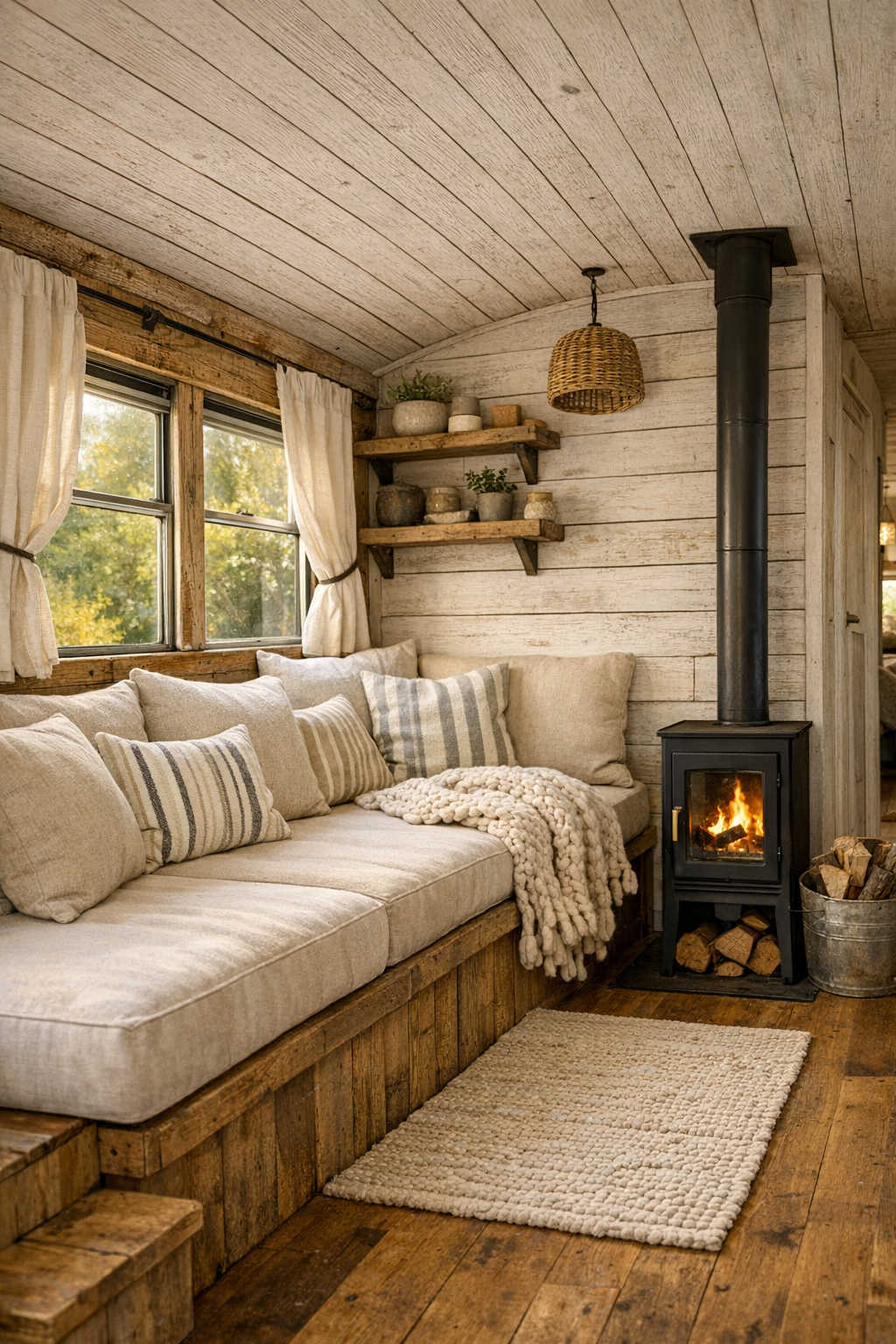
The living room is one of those small spaces that immediately makes you exhale. A built-in bench sofa runs along one side beneath the bus windows, topped with oatmeal-colored cushions, striped pillows, and a chunky knit throw that adds softness without clutter. Opposite, a slim wood-burning stove anchors the room and gives it a true hearth feeling, while whitewashed wood paneling brightens the narrow interior and keeps the rustic materials from reading too dark or heavy.
Because the footprint is compact, every choice has to work hard, and here it does so beautifully. Under-seat drawers tuck away board games, extra blankets, and all the little things family life seems to collect, while a nesting coffee table can be shifted around as needed for snacks, homework, or a quiet cup of coffee. I can easily picture kids stretching out with books in the afternoon or friends gathering shoulder to shoulder after dinner, and that is the real success of this room: it feels intimate, but never cramped.
Dining Room
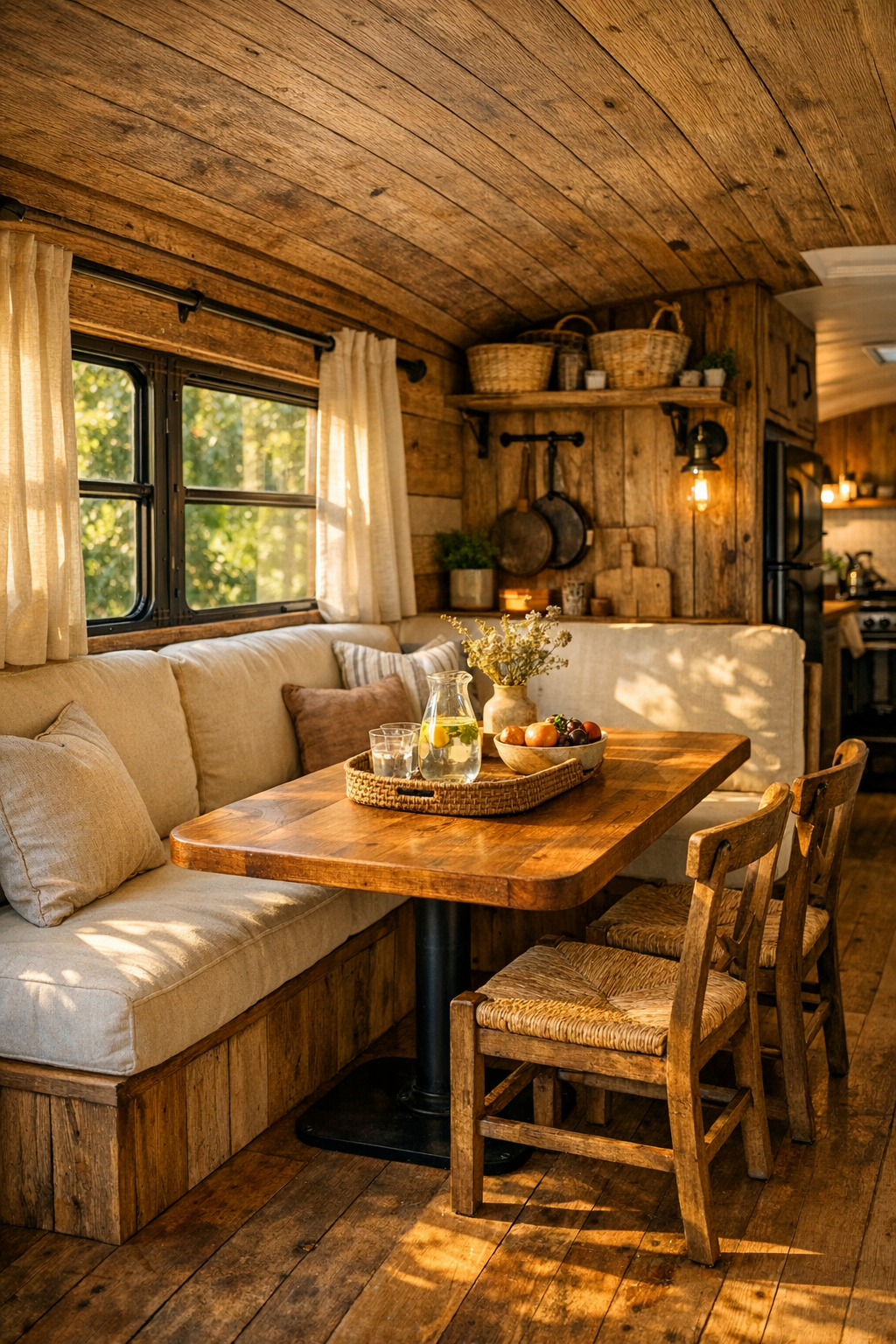
The dining area is tucked neatly between the living space and kitchen, and it is arranged with the kind of efficiency that makes small-home living feel joyful rather than restrictive. A custom banquette hugs the wall, paired with a solid wood table that has rounded corners to soften the tight circulation path. A pair of simple chairs can be moved in as needed, but the built-in seating is really the star, especially with storage hidden below for table linens, pantry overflow, or the craft supplies that always seem to follow families to the table.
I love a dining space that feels ready for more than one job, and this one absolutely does. In the morning, it would be bright and cheerful for breakfast; by afternoon, it easily becomes a homework station or a place to shell peas from the garden. A small linen pendant overhead adds a gentle glow at night, and the mix of honey-toned wood, creamy upholstery, and black iron details gives the room a handmade, gathered-over-time feeling that suits the homestead setting so well.
Kitchen
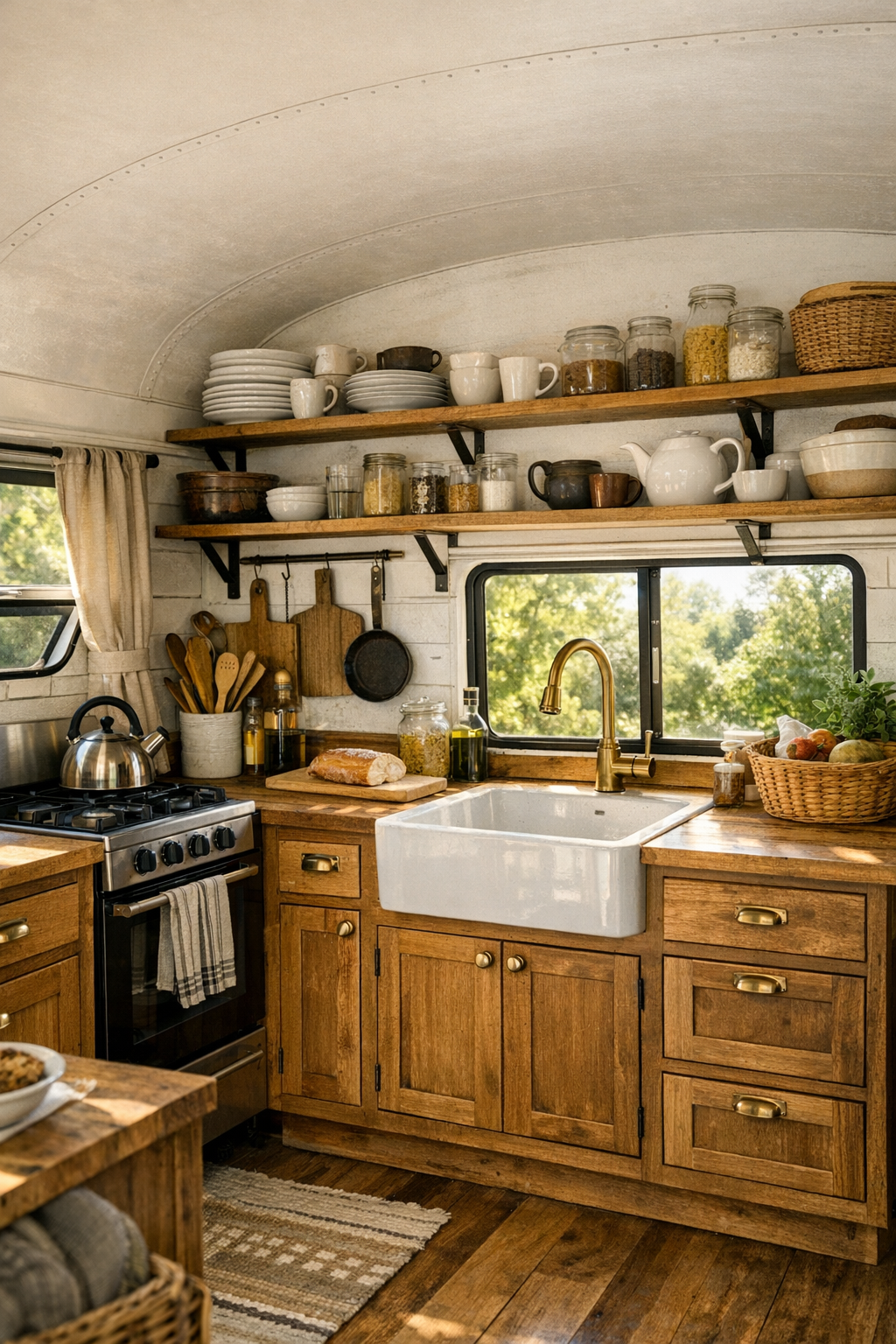
The kitchen may be compact, but it is planned with the kind of care that makes cooking feel easy, and as someone who is always thinking about the next meal, I appreciate that right away. Lower cabinets in warm stained wood are paired with open shelving above, keeping the space visually light while still offering room for everyday dishes, jars of dry goods, and a few pretty crockery pieces. The countertop appears to be butcher block, which adds to the farmhouse warmth and feels perfectly suited to bread-making, vegetable chopping, or setting out a simple snack board when company stops by.
There is a lovely practical rhythm to the layout, with the sink placed near a window, a compact range close at hand, and just enough uninterrupted prep space to make real meals possible. I can picture a pot of soup simmering here, or a make-your-own flatbread supper that lets picky eaters choose their toppings without anyone fussing. Brass hardware and a small row of hooks for mugs and utensils bring in those finishing touches that make a kitchen feel personal, while soft daylight and pale walls keep the narrow galley from ever feeling closed in.
Bedroom
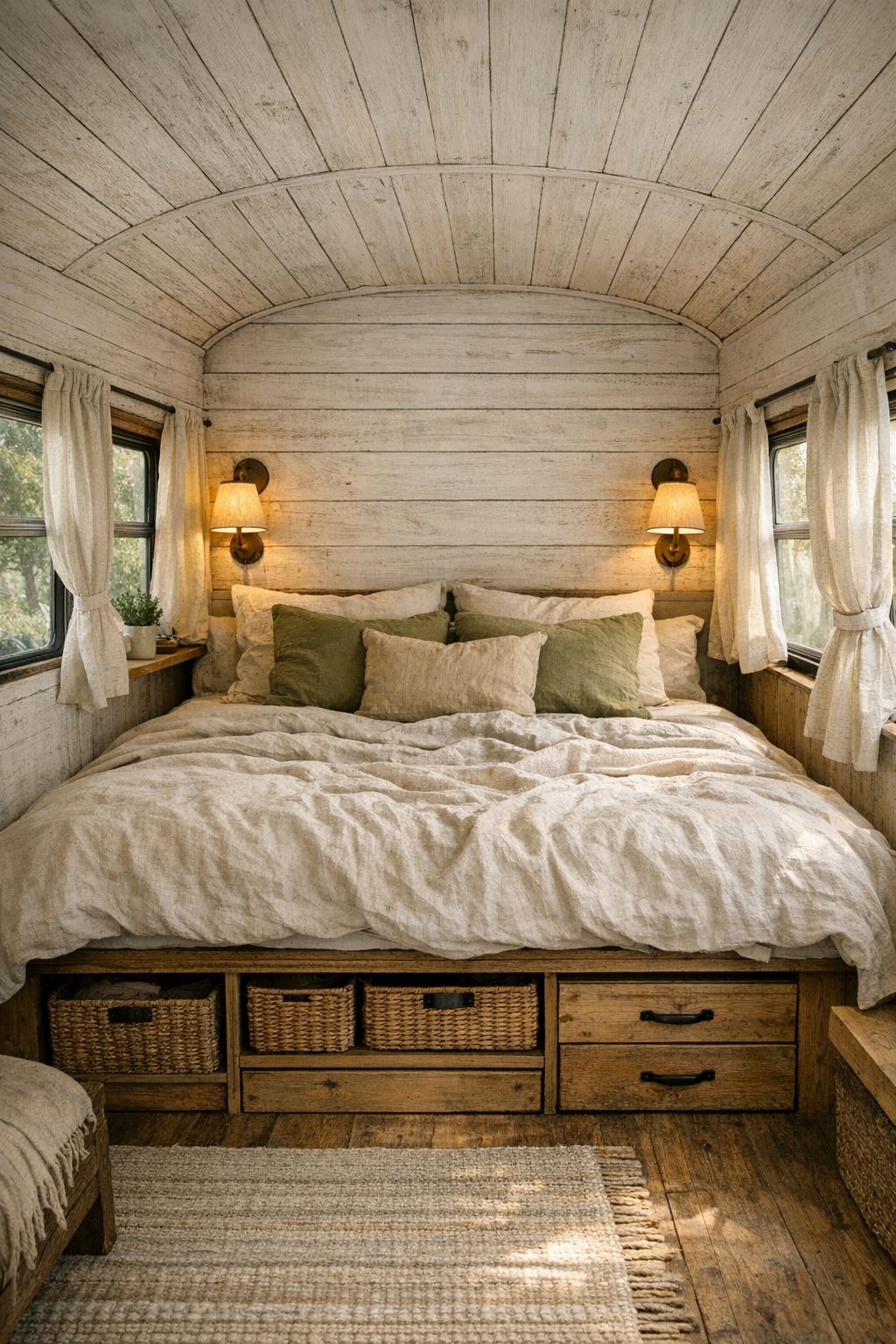
The bedroom is where the bus feels most surprisingly serene. Rather than trying to overfill the space, the design keeps things simple with a built-in bed framed in wood, crisp natural bedding, and a palette of ivory, flax, faded olive, and soft brown. The windows are dressed with lightweight linen curtains that filter the morning light, and the walls continue the same bright paneling used throughout, which helps the room feel airy and restful.
Storage is handled smartly here too, with drawers below the bed and shallow cabinetry fitted into every possible edge. A narrow ledge serves as a bedside table without jutting awkwardly into the walkway, and a pair of warm reading sconces gives the room a gentle evening glow. I always think bedrooms should feel like a place to truly settle down, not just a spot to sleep, and this one manages exactly that with very little excess—just texture, calm, and enough breathing room to feel cared for.
Bathroom
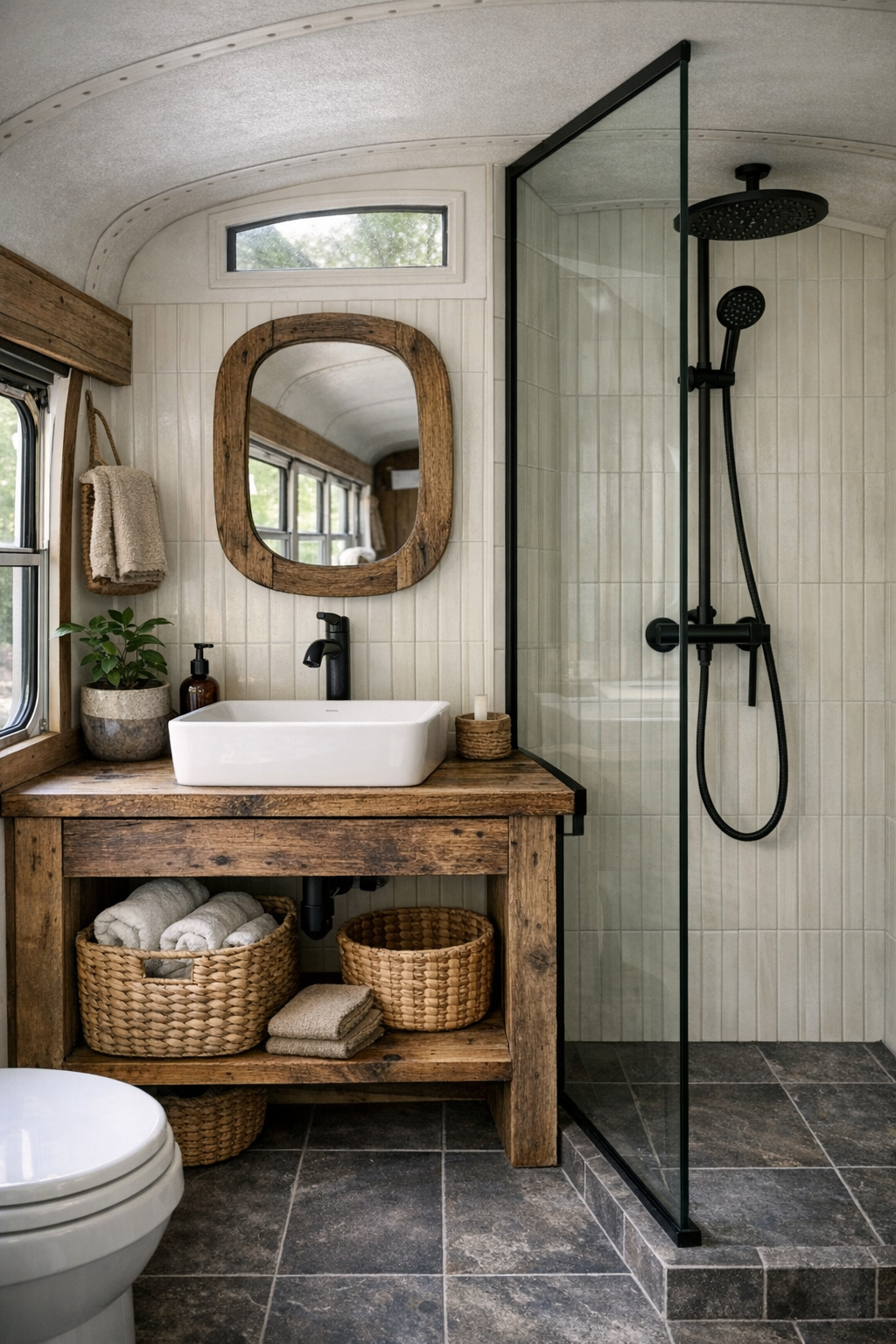
The bathroom is compact but beautifully grounded, with finishes that make it feel more like a thoughtfully designed cabin washroom than a compromise. A small vanity in reclaimed wood is topped with a simple stone or concrete basin, and the wall behind it is lined in vertical tile in a soft creamy shade that reflects light nicely. Black fixtures add definition, while woven baskets and wooden shelves keep toiletries and towels neatly organized without crowding the space.
What I like most is that the room does not try to hide its size; instead, it leans into clarity and restraint. A glass shower partition helps maintain sightlines, and the floor appears to be a durable slate-look tile that brings in a touch of earthy contrast. It feels fresh, clean, and easy to maintain, which matters in any home, but especially in one built for off-grid living where every material needs to earn its keep.
Other Areas
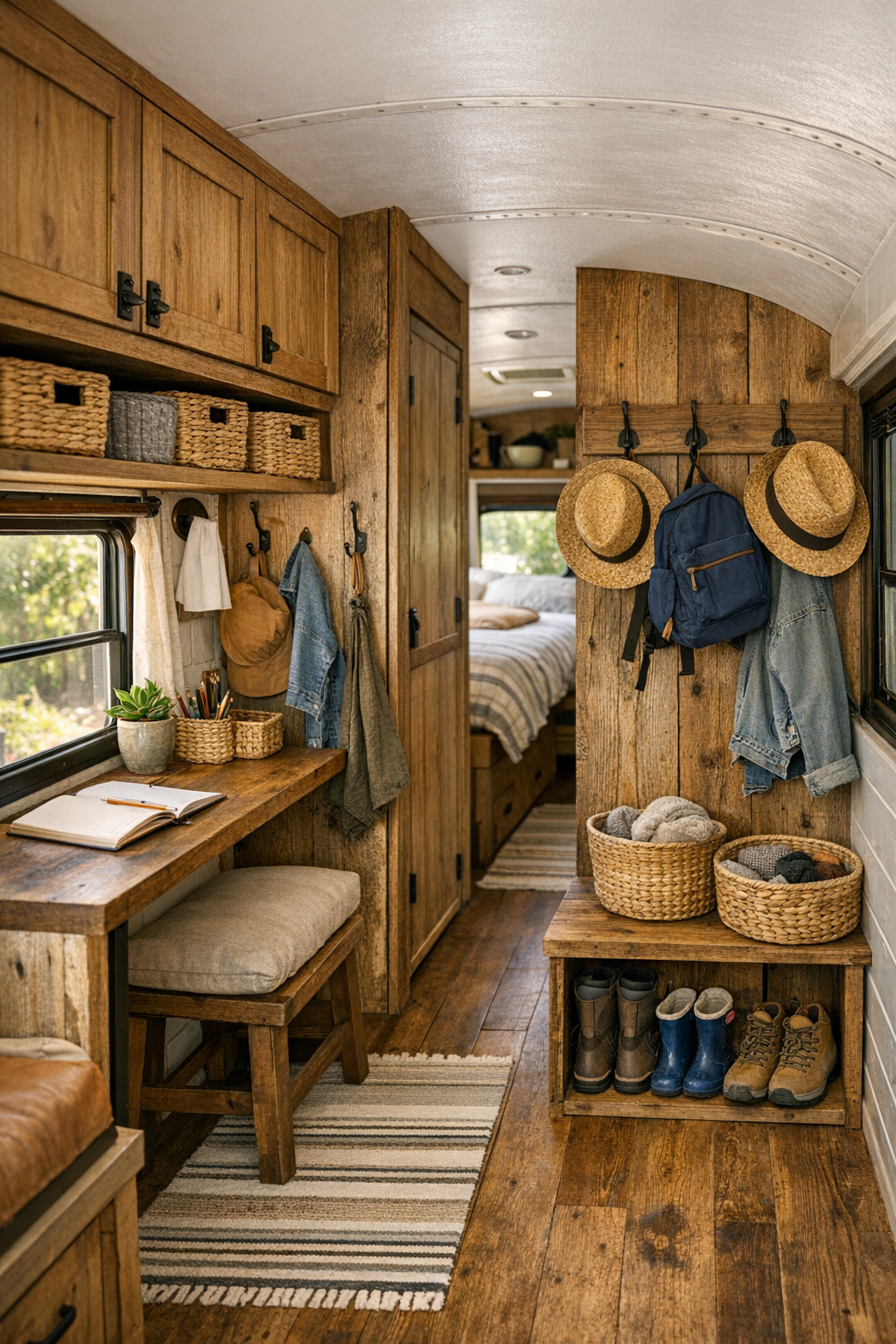
The circulation spaces and multipurpose corners are where this bus really proves how carefully it has been designed. Overhead cabinets follow the curve of the ceiling without making it feel boxed in, and small transition zones are used for hooks, boot storage, folded camp stools, and even a narrow desk ledge for writing grocery lists or checking the weather. These in-between areas are often overlooked, but in a home this size they shape how daily life actually works.
I am especially charmed by the little touches that make the bus feel ready for a full family day, not just a pretty photograph. There is room for baskets of produce, a spot for jackets by the entry, and open shelving where a few books, seed packets, or children’s art could live comfortably. The whole home seems to understand that beauty is not only about finishes—it is also about giving ordinary routines a graceful place to happen.
Why You'd Live Here
This home offers something many larger houses never quite manage: a strong sense of purpose. Every material, built-in, and window placement supports a simpler, slower way of living while still feeling beautiful enough to savor every day. If you love the idea of waking up close to nature, cooking with the windows open, and keeping only what truly serves your family, this bus makes that lifestyle feel not only possible but deeply appealing.
I think that is what stays with me most about this design. It is rustic without being rough, compact without feeling deprived, and practical without losing its heart. For anyone drawn to off-grid living with warmth, character, and a real sense of home, this is the kind of place that invites you to settle in, pass the bread, and stay awhile.