
From the outside, this little faded gray RV camper keeps its secrets well. It has that weather-softened, road-worn look that so many practical rigs do, the kind of exterior you might mistake for ordinary at a glance, parked under tall trees with a bit of gravel underfoot and the hush of open country all around. But the minute I began imagining the inside of this concept design, I could feel the whole mood shift from modest and overlooked to warm, deeply lived-in, and surprisingly refined.
What makes it special is not extravagance but care. Every inch feels considered, as though someone who understands both beauty and daily chores stood in the middle of this small footprint and asked how to make it graceful, useful, and comforting all at once. It has the soul of a country cottage tucked into a compact shell, with gentle wood tones, hardworking finishes, and the kind of inviting atmosphere that reminds me of kitchens where coffee is always on and nobody minds if you stay a while.
Exterior
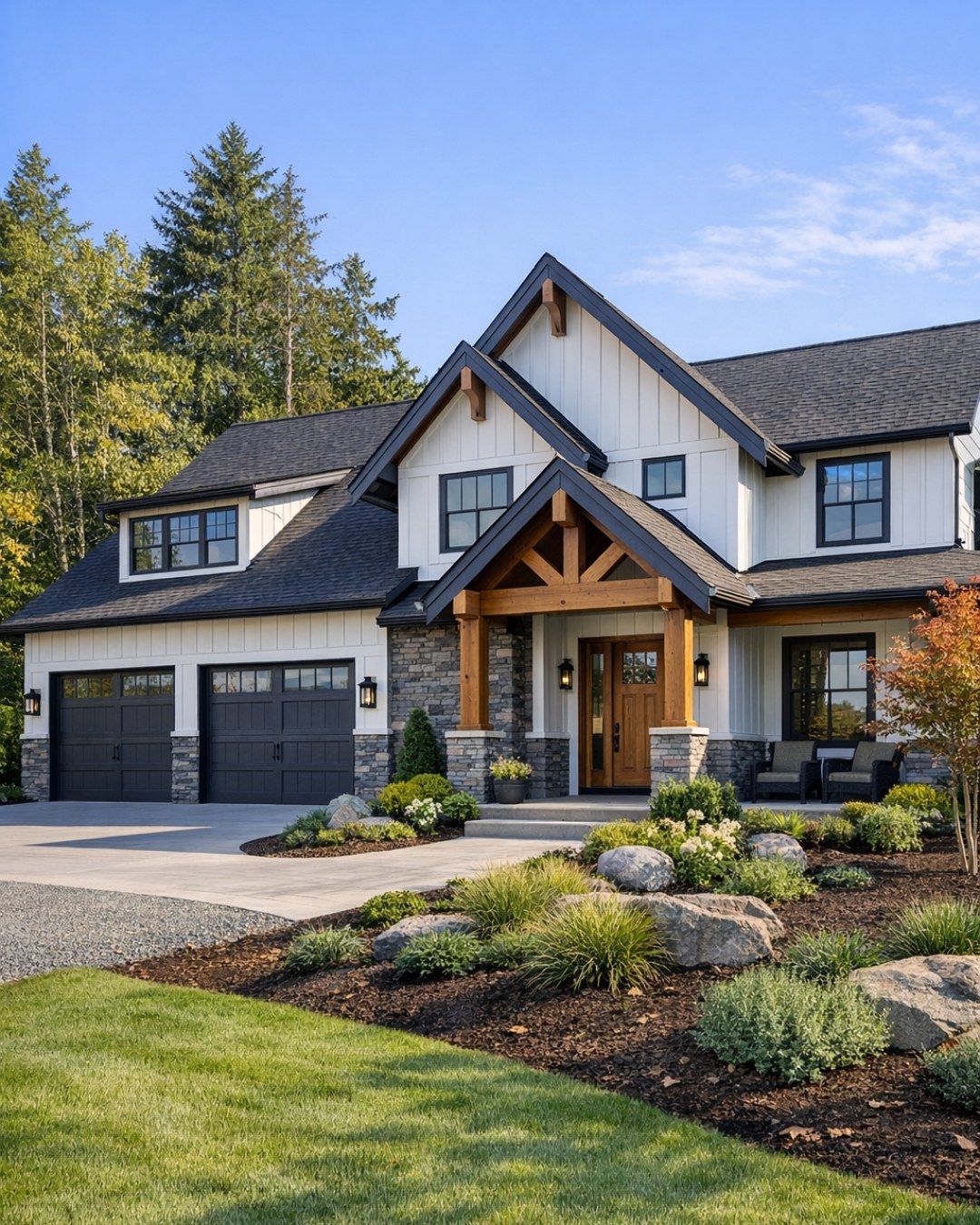
The camper’s exterior leans into its faded gray finish rather than fighting it, and that is exactly the right instinct. The siding feels softly matte, almost chalky in the nicest way, with white trim that freshens the outline and gives the whole profile a little definition. I picture modest black hardware, a simple entry light, and perhaps a fold-out step that looks sturdy rather than flashy. It has the unpretentious appeal of something built to travel and then loved long enough to earn a little character.
What I like most is the contrast between the subdued shell and the welcome it promises. A small striped awning, a pair of practical planters, and maybe a lantern glow near dusk would be enough to make this camper feel settled without taking away its straightforward charm. In a rural setting especially, that quiet gray would sit beautifully against grass, gravel, weathered fencing, and big Midwestern sky, letting the landscape do part of the decorating.
Living Room
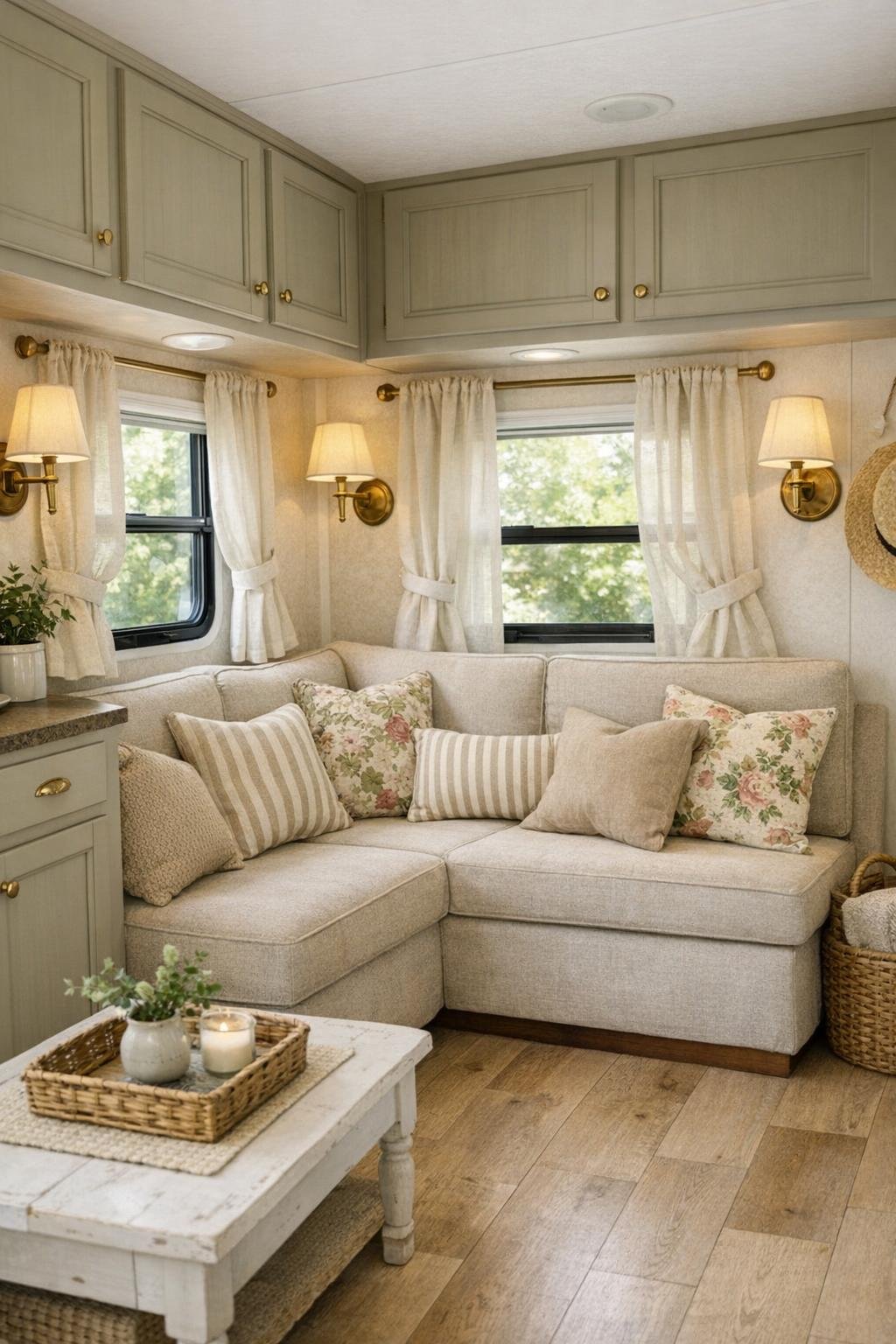
The living area is where this camper begins to surprise you. Instead of the usual cramped, forgettable arrangement, the room opens with a built-in bench sofa in oatmeal linen, layered with ticking-stripe cushions, soft knit throws, and a couple of faded floral pillows that keep it from feeling too tailored. Pale oak-look planks run underfoot, visually stretching the space, while creamy walls bounce light around in a way that makes the room feel broader than it truly is. I can almost see afternoon sun catching on the wood grain and making the whole room glow like butter.
Across from the seating, I imagine slim storage cabinetry painted a warm putty color, topped with open shelves for crockery, books, and a few old-fashioned details that make a place feel human. The lighting is simple but thoughtful: a pair of small brass sconces, one compact shaded lamp, and plenty of natural light from windows left mostly unburdened except for soft café curtains. It feels calm, sensible, and sweet-natured, like a room where you could mend a hem, shell peas, or settle in with a slice of pie and not feel one bit out of place.
Dining Room
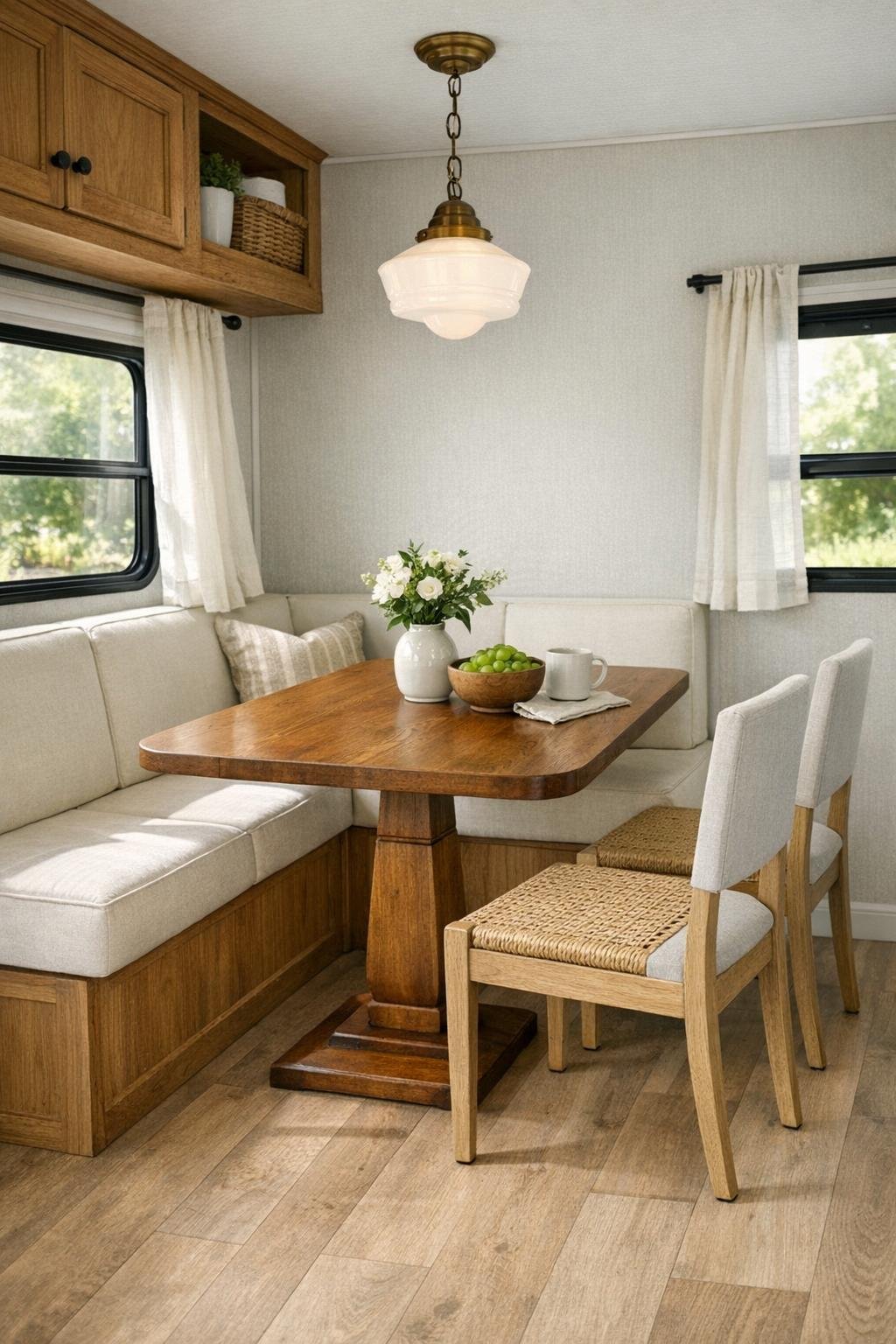
In a home this compact, the dining space has to earn its keep, and here it does so beautifully. I picture a petite dinette with a pedestal table, rounded corners, and a top finished in warm wood that shows its grain. The seating might be a combination of a built-in banquette on one side and a pair of slender chairs on the other, upholstered in easy-to-clean fabric the color of fresh cream. That mixture keeps the room from feeling boxed in, while still making room for a proper meal instead of a rushed bite.
The palette stays gentle and familiar, with soft grays, honeyed wood, and just a touch of muted sage perhaps in the seat cushions or a narrow curtain trim. Overhead, a compact schoolhouse-style pendant would give the table a little presence without overwhelming the ceiling line. This is the sort of dining nook I find especially appealing because it feels useful in the old-fashioned sense: a place for biscuits in the morning, card games at night, and all the little in-between moments that make a small home feel generous.
Kitchen
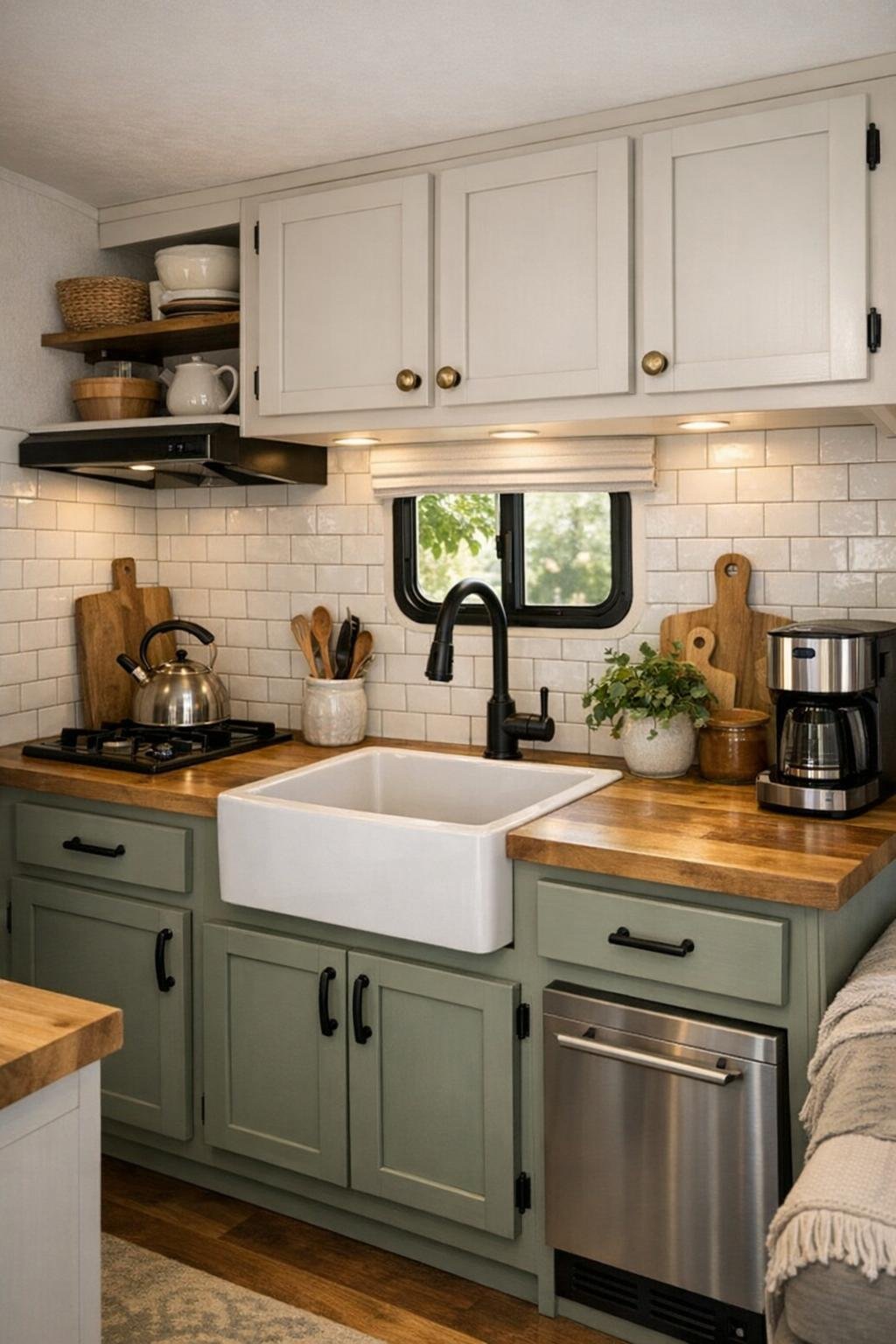
The kitchen is, to my eye, the heart of the whole camper, and it is handled with real intelligence. Lower cabinets in a muted sage or dusty olive ground the room, while upper shelves or light-painted cupboards keep the top half airy. I imagine butcher-block counters with eased edges, a small farmhouse-style sink, and a simple white tile backsplash laid in a neat running bond. Nothing is fussy, but everything has a certain honesty to it, the sort of finish selection that understands cooking is both work and pleasure.
Because space is precious, the layout likely runs in a clean galley line with every inch pulling its weight: a narrow stove, compact refrigerator, peg rails for utensils, and clever drawers fitted for pans and pantry goods. Brass or black iron pulls would add just enough definition, and under-cabinet lighting would make the counters feel cheerful instead of tight. I love a kitchen that looks ready for real suppers, and this one feels prepared for all of it, from a skillet of cornbread to a pot of soup on a rainy evening.
Bedroom
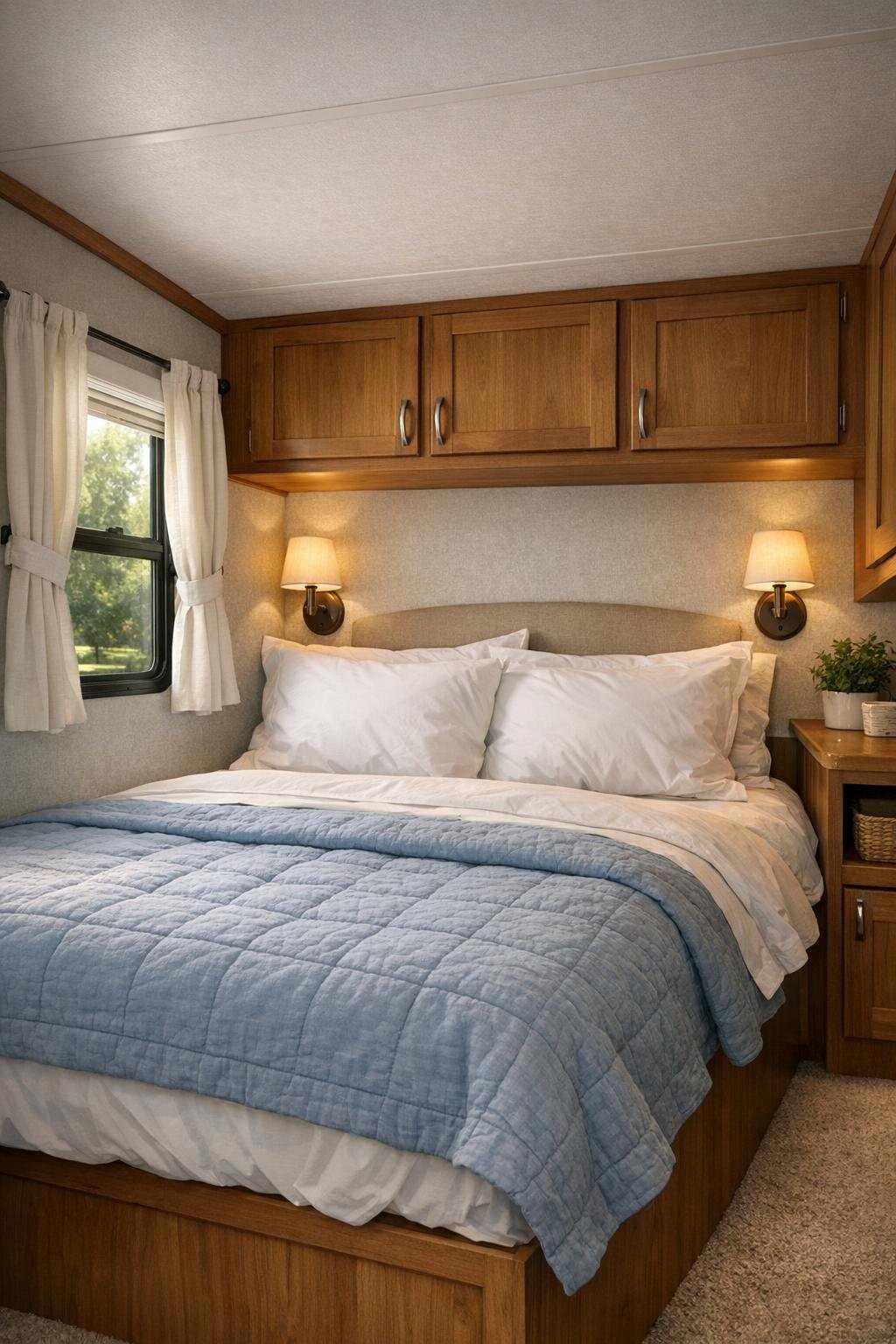
The bedroom carries the same gentle hand as the rest of the camper, but with an even softer touch. I picture a built-in bed dressed in crisp white bedding, a quilt in faded blue or washed floral print, and pillows layered just enough to feel inviting without crowding the room. Wood trim around the window and bed platform would bring in that familiar cabin warmth, while the wall color stays light and restful, somewhere between ivory and the palest gray.
Storage is likely tucked all around in the best possible way, with overhead cabinets, under-bed drawers, and perhaps a slim ledge for a book, reading glasses, and a little lamp. The lighting should be warm and low, with compact sconces for evening and natural light in the morning softened by simple curtains or woven shades. What I appreciate here is the lack of pretense. It feels like a place made for proper rest, for listening to rain on the roof, and for waking up slowly with the windows cracked to the country air.
Bathroom
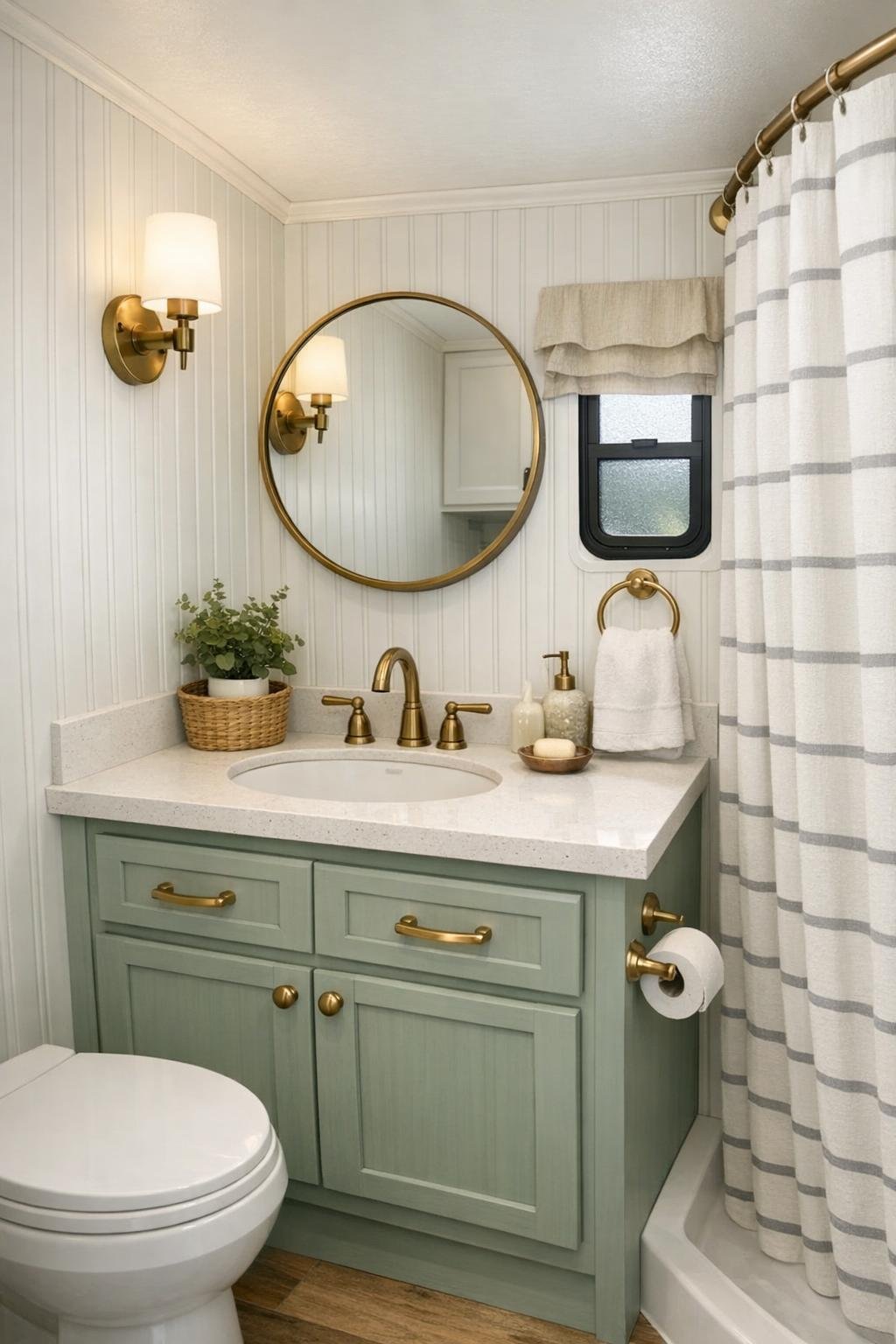
The bathroom, though surely modest in size, sounds to me like one of the cleverest rooms in the whole arrangement. I imagine a compact vanity in painted wood, perhaps in the same sage family as the kitchen, topped with a durable white surface and a small undermount sink. The walls could be finished in beadboard or a moisture-friendly painted panel, which would add texture without making the room feel crowded. A shower curtain in a simple stripe or tiny floral would soften all the practical lines.
Good bathroom design in a camper comes down to balance, and this one seems to understand that. A rounded mirror helps break up the boxiness, while warm metal fixtures add a little polish. The floor might be a tiny patterned tile or a resilient surface that mimics stone, grounding the room and giving it some visual charm. It would feel clean, bright, and a little nostalgic, like those old guest baths in country houses that were never large but always had a fresh towel and a bar of nice soap waiting.
Other Areas
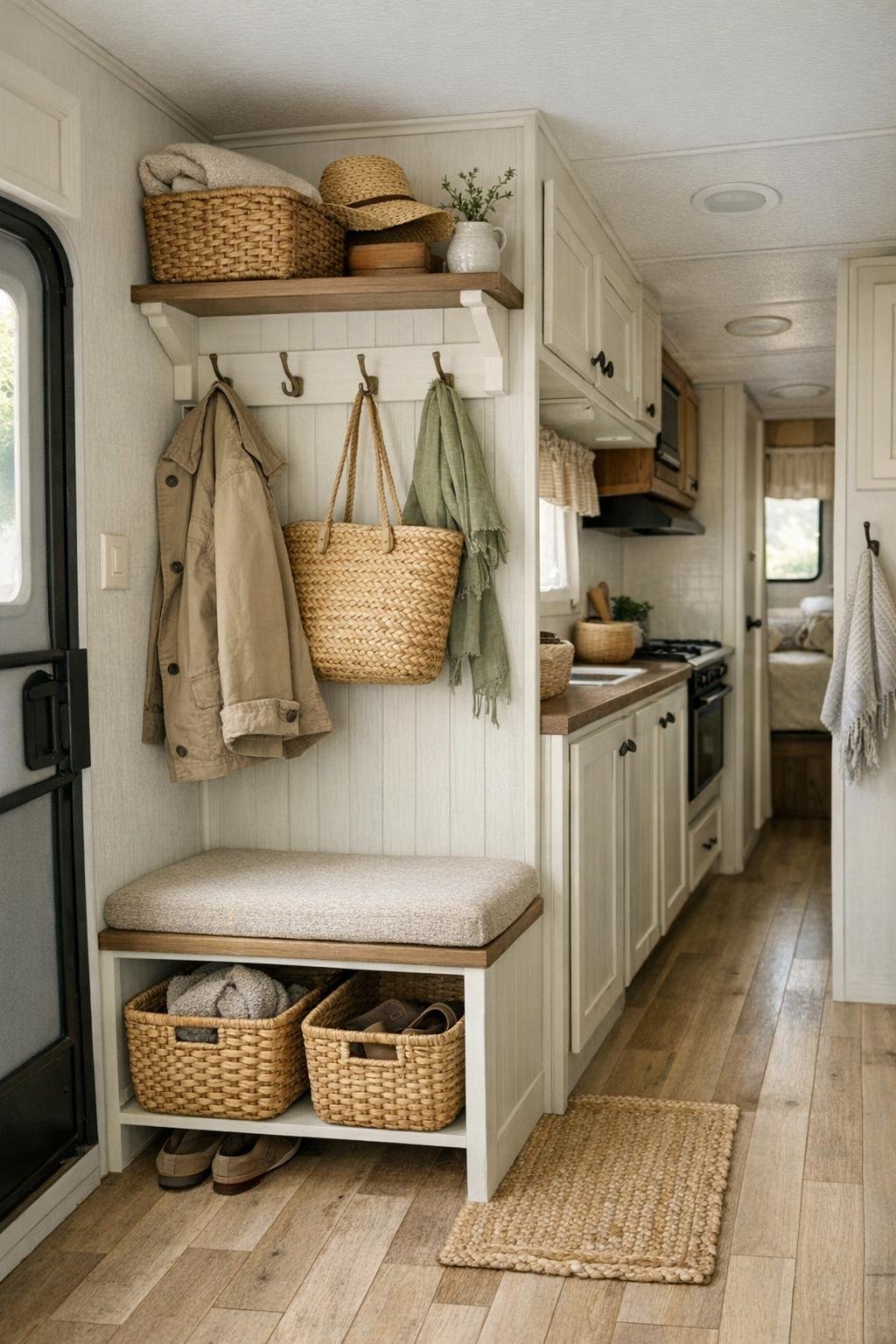
What often lifts a small home from merely efficient to truly memorable are the in-between spaces, and this camper seems rich with them. I think of the entry corner with hooks for jackets, a narrow shelf for keys and mail, and perhaps a little woven basket tucked below for muddy shoes. Even the hallway, if one can call it that, would benefit from the same discipline seen elsewhere: consistent trim, soft paint, and storage built right into every awkward inch. In a compact home, those details are not extras; they are the architecture of daily ease.
I also suspect there are small transformable moments throughout, the sort that make RV living feel almost magical when done well. A bench lid that opens for blankets, a fold-down work surface, shelves fitted into a niche, maybe even a reading perch by a window. Those touches remind me of old farmhouses where nothing was wasted and everything had two jobs. Here, they add not only practicality but a kind of affection, as though the home is quietly helping you along with the day.
Why You'd Live Here
You would live here because this camper understands something many larger homes forget: comfort is not measured in square footage. It is measured in usefulness, warmth, and the quiet pleasure of materials chosen well. This interior turns a faded gray shell into a deeply welcoming retreat, one that feels rooted even if it can still roll down the road. To my mind, that is a rare and lovely achievement.
I can see this home appealing to anyone who loves the idea of living simply without living plainly. It offers the romance of the countryside, the discipline of small-space design, and the familiar reassurance of rooms that feel ready for everyday life. And truth be told, that is what made me stop and stare. Not just that it was pretty, but that it felt like a place where ordinary days could be made wonderfully rich.