
There is something mighty comforting about a home that knows exactly what it is, and this converted school bus has that kind of quiet confidence. From the outside, it still carries a bit of its hardworking past, but step into the idea of it and the whole place softens into a snug, well-ordered retreat with country good sense and a touch of wanderlust. Tucked into a landscape I imagine with gravel underfoot, open sky above, and maybe a line of trees turning gold in the fall, the bus feels practical, cheerful, and deeply personal all at once.
What makes it special is the way small-space living has been handled with the same care I’ve always admired in old farm kitchens and modest Midwestern homes: nothing wasted, everything considered, and beauty found in usefulness. Though this is a concept design, it feels rooted in the kind of real-life comfort I’ve known for years, where warm wood, honest materials, and thoughtful storage can make even the smallest footprint feel generous.
Exterior

The exterior keeps the recognizable silhouette of a classic school bus, but the finish has been transformed into something more settled and residential. I picture the original yellow toned down into a muted cream or warm wheat, paired with matte black trim around the windows and wheel wells, so the whole bus looks crisp without losing its history. The long body is visually softened by planters near the entry, a simple retractable awning, and perhaps a small set of wooden steps that gives the entrance the welcoming feel of a front porch, however tiny.
What I like most is that it doesn’t try too hard to disguise itself. The ribs of the bus body, the rhythm of the windows, and the sturdy stance all remain, but they’re balanced by homey touches that make the structure feel lived-in rather than improvised. It has the plainspoken charm of something repaired, repurposed, and respected, and that honesty gives the whole design its character.
Living Room
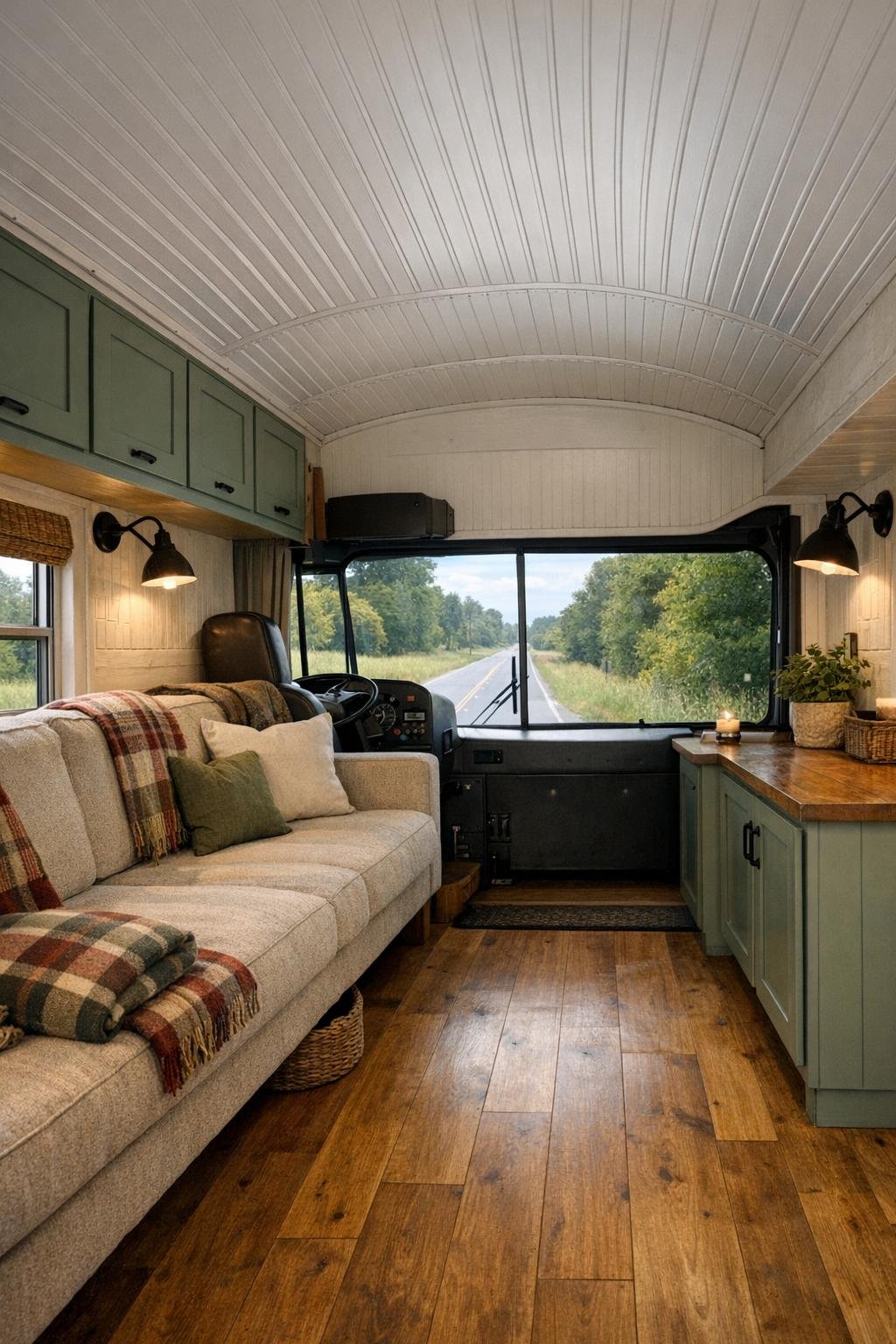
The living room is arranged right up front where the windshield can do the work of a grand picture window, bringing in daylight by the armful. A built-in bench sofa runs along one side, upholstered in durable oatmeal linen with storage tucked underneath, and across from it a slim wall of cabinetry in painted sage green keeps books, throws, and daily clutter nicely in hand. Honey-toned wood planks line the floor, and the ceiling is finished in narrow beadboard that makes the bus feel taller and brighter than you’d expect.
I can just see a wool plaid blanket folded in the corner, a pair of soft reading lamps mounted to the wall, and a small nesting table that can be shifted around as needed. The palette is gentle and familiar—cream, weathered green, warm brown, and a little black metal for contrast—and it gives the room the sort of settled calm that reminds me of sitting down after supper in a house where everyone knows where the extra quilt is kept.
Dining Room
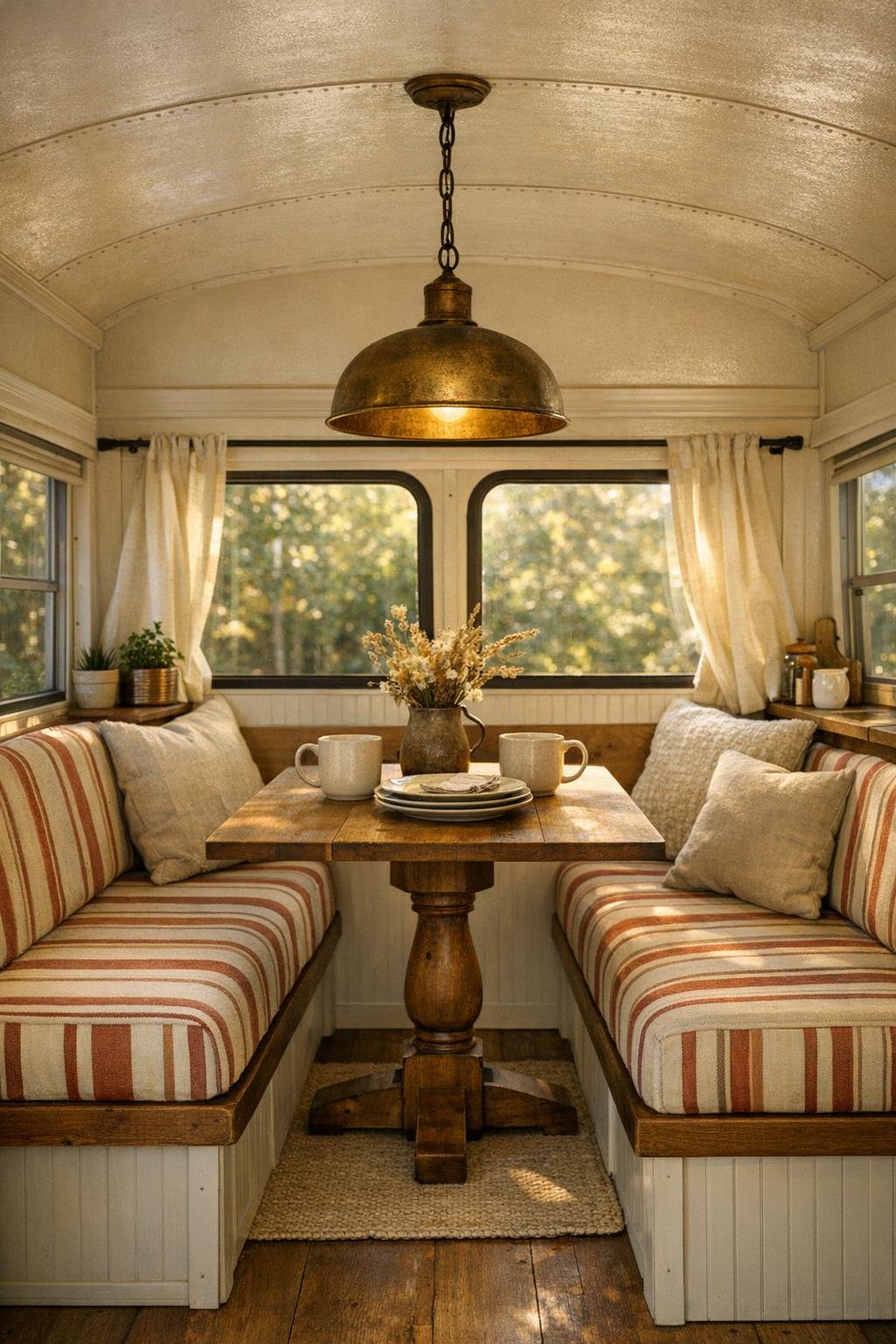
The dining area is small, of course, but cleverly treated so it feels like a proper place to linger over coffee and a slice of pie. A built-in banquette hugs the wall beneath the windows, with a rectangular pedestal table sized just right for two, or four if company is close enough to squeeze in comfortably. The seat cushions are covered in a practical striped fabric, and the base of the banquette offers more concealed storage, which is exactly the kind of sensible detail I never stop appreciating.
Above the table, I’d use a modest pendant in aged brass or black enamel, hanging low enough to create intimacy without crowding the line of sight. Natural light catches on the painted millwork and the grain of the tabletop, while a narrow shelf nearby might hold a crock, a stack of stoneware plates, or a little vase of Queen Anne’s lace. It feels unpretentious and gracious, like a breakfast nook that simply happens to be rolling life into a smaller frame.
Kitchen
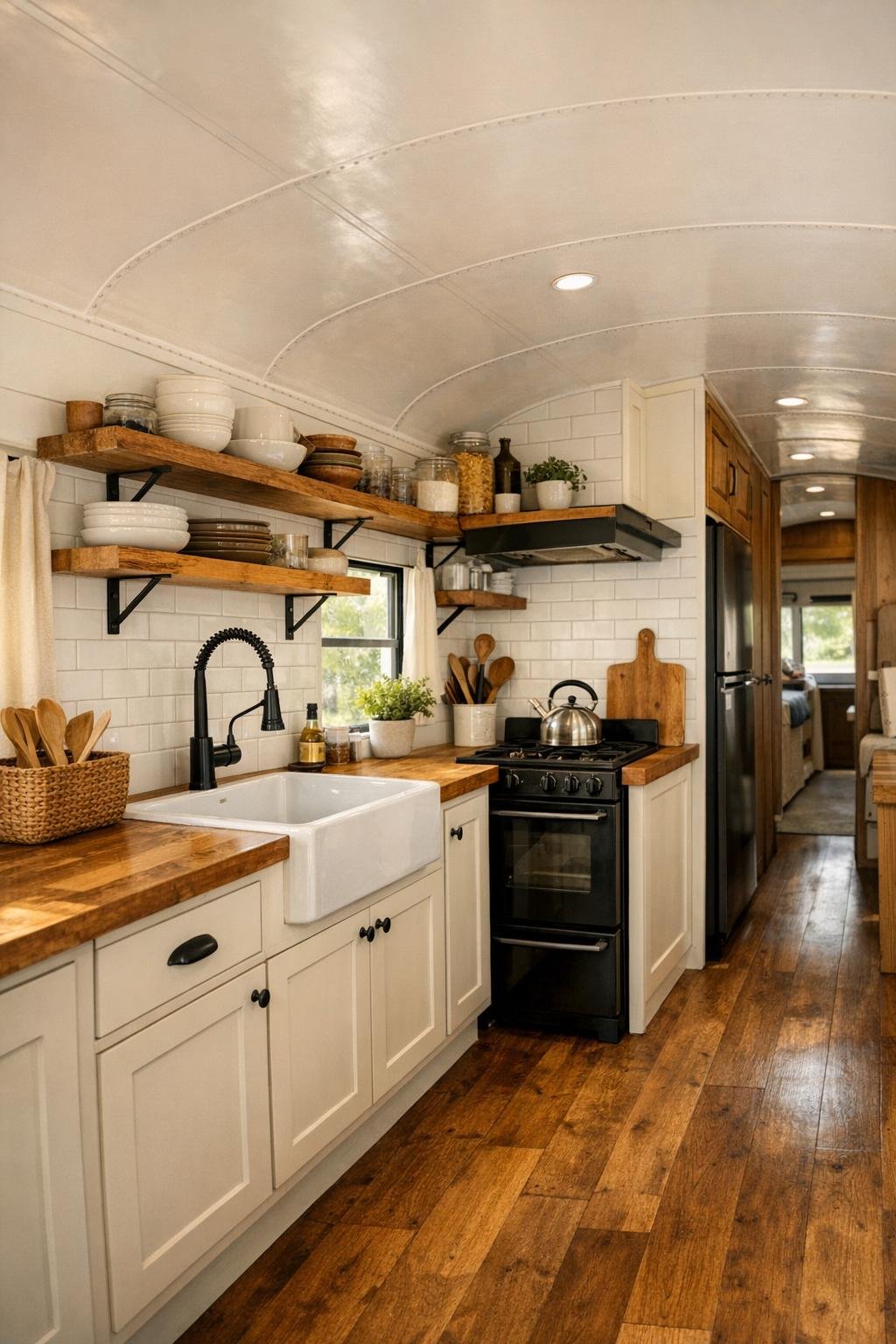
The kitchen is the heart of this little home, and I confess it’s the room I always judge first. Here, the layout is galley-style and wonderfully efficient, with butcher block counters, creamy shaker cabinets, and a deep farmhouse sink fitted neatly below a window. Open shelving keeps everyday dishes close at hand, and a slender backsplash of white tile reflects light without making the room feel fussy. Every inch works, but nothing appears pinched.
I especially love the thought of a narrow vintage-style range in a soft black finish, paired with simple cup pulls and a peg rail for hanging towels or utensils. There’s enough warmth in the wood and enough brightness in the painted surfaces to keep the kitchen balanced, and the overall effect is tidy, capable, and deeply comforting. It has that same honest spirit as a good biscuit recipe: straightforward, dependable, and better because it doesn’t overcomplicate itself.
Bedroom
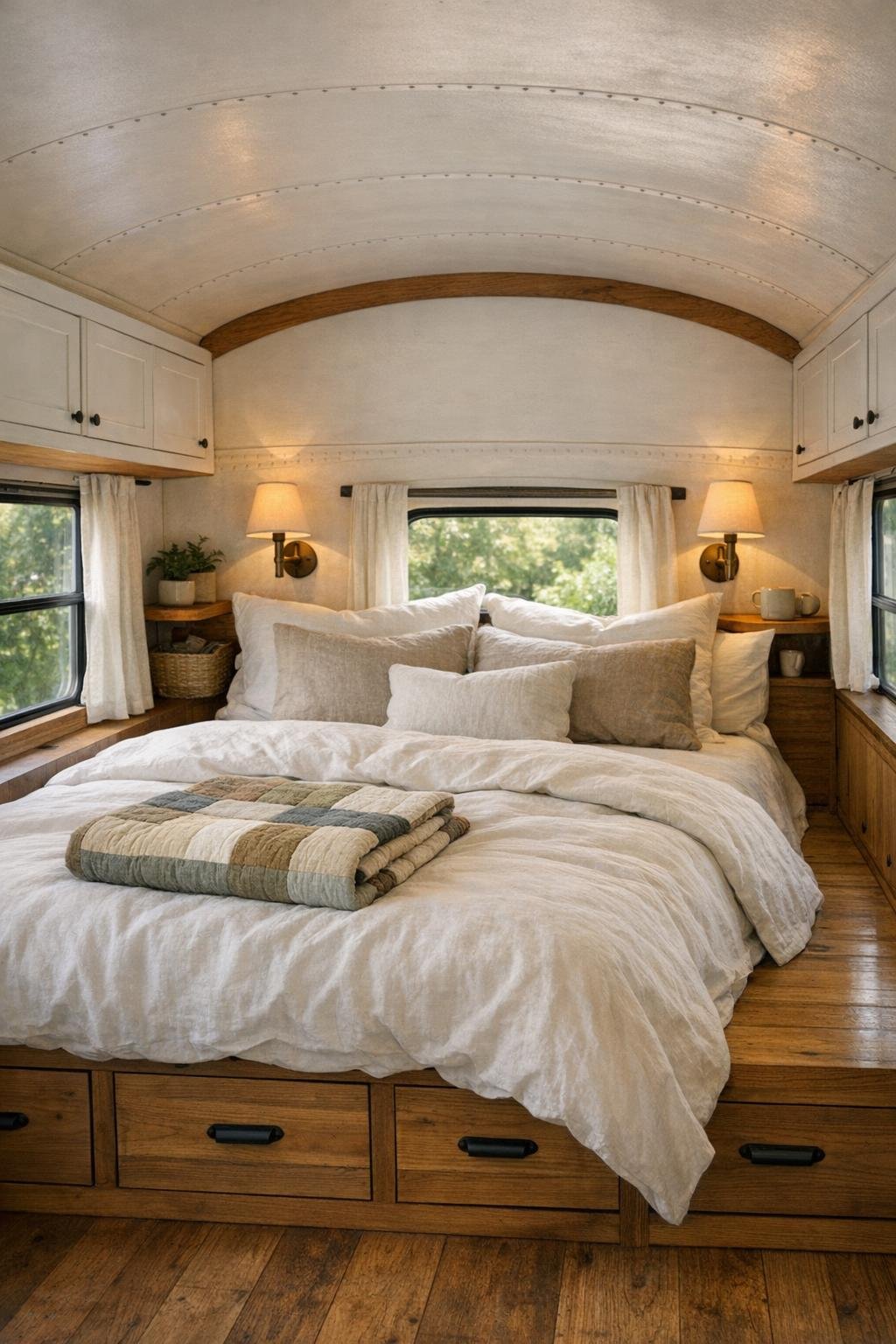
The bedroom at the rear feels tucked away and protected, which is just what you want in a compact home. A full or queen mattress is set into a custom platform with drawers below, and the surrounding walls are lined with simple cabinetry in a painted neutral, making the bed feel almost like an alcove. Linen bedding in soft white and flax tones keeps the room airy, while a quilt folded at the foot adds the handmade touch this design wears so well.
Because the bus shape curves and narrows, the room benefits from keeping the furnishings built-in and low, allowing the windows and ceiling line to stay open. Small sconces replace table lamps, freeing every possible surface, and woven baskets or inset cubbies make the storage feel orderly rather than crowded. The mood is restful and unfussy, like a guest room at a farmhouse where the sheets are cool, the morning light is gentle, and sleep comes easy.
Bathroom
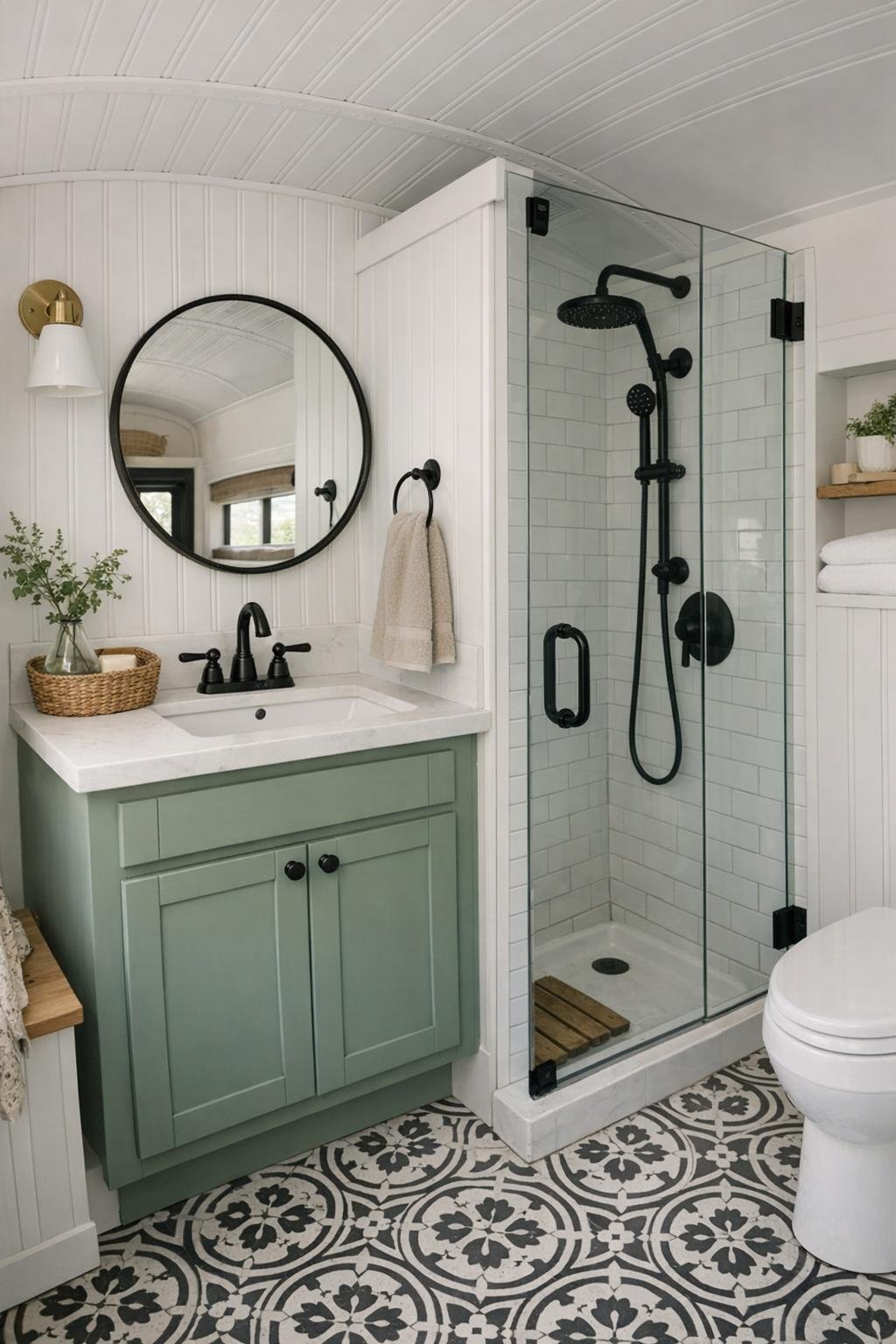
The bathroom is compact but handled with real grace, proving that small does not have to mean stark. A petite vanity in painted green or weathered oak supports a simple white sink, with a rounded mirror above to soften all the straight lines of the narrow layout. The walls are clad in painted paneling or vertical tile, and the floor might shift to a small-scale pattern in muted charcoal and cream, giving the room a little decorative spirit without overwhelming it.
At the far end, a glass shower enclosure keeps sightlines open, and brass or matte black fixtures add just enough polish to elevate the space. I’d want a thick cotton towel on a sturdy hook, a small shelf for soap and a jar of bath salts, and perhaps a tiny window letting in the sort of morning light that makes even a modest room feel fresh. It is neat, bright, and thoughtfully composed, with none of the coldness that sometimes creeps into modern small bathrooms.
Other Areas
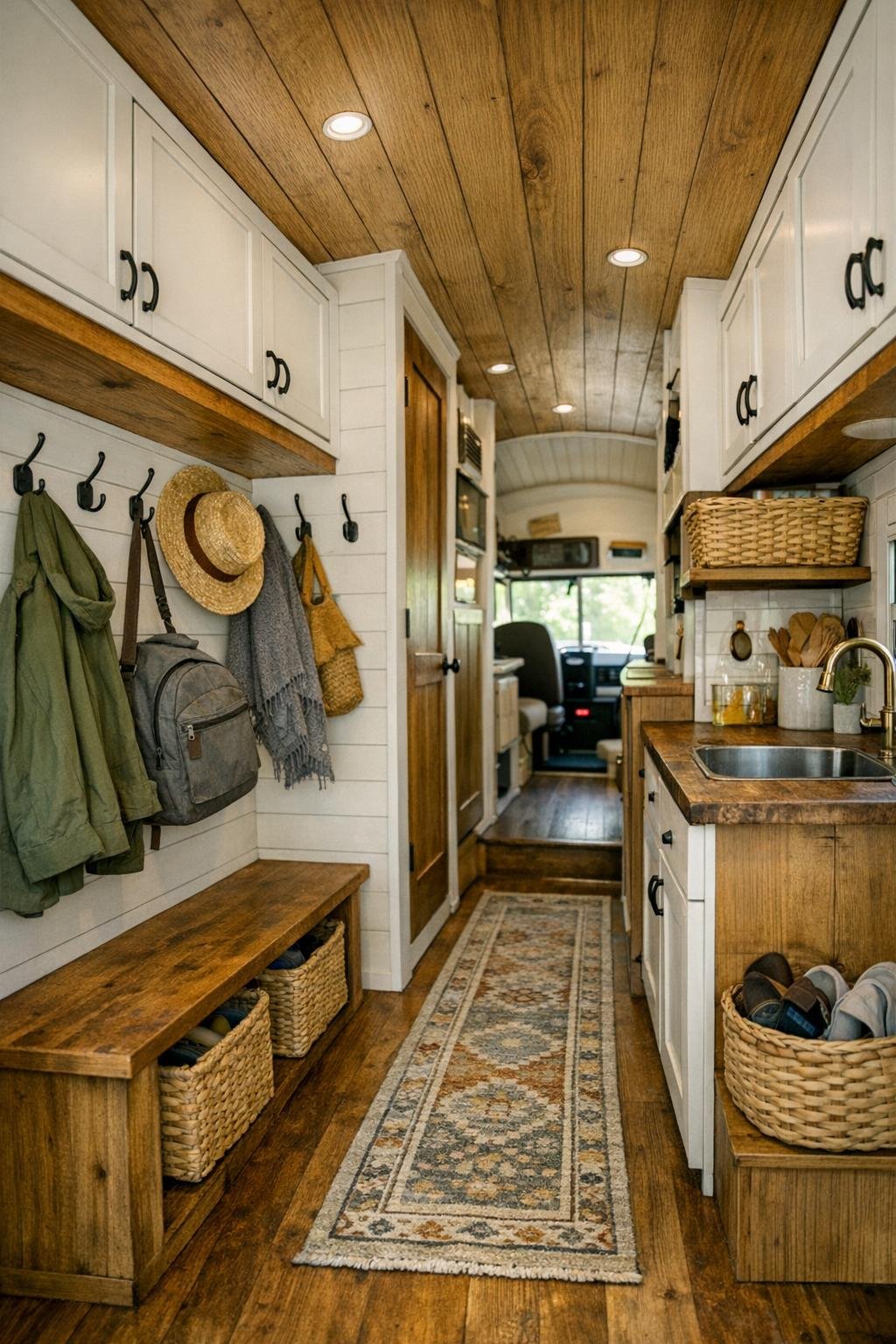
The circulation spaces and utility zones are where a bus conversion either earns its keep or gives itself away, and this one seems especially thoughtful. Overhead cabinets are integrated so they follow the line of the bus without making the ceiling feel heavy, and there are likely hidden compartments under steps, benches, and beds that make everyday living far easier. A narrow entry moment by the door might include hooks for jackets, a tray for muddy shoes, and a shelf for keys or a thermos, all the little things that keep a home running smoothly.
Even transitional spaces are given texture and character through wood trim, washable runners, woven baskets, and hardware with a hand-finished look. I can imagine a slim desk nook, a pet bed tucked under a bench, or a stack of well-used cookbooks held in place on a shelf while the road rests outside. These in-between areas are what make the bus feel not just styled, but genuinely inhabited, and that distinction means a great deal to me.
Why You'd Live Here
You’d live here if you believe comfort is more about care than square footage. This bus takes the plain utility of an old vehicle and turns it into something tender, capable, and beautifully ordered, with every cabinet, cushion, and fixture working a little harder so life can feel a little easier. It honors the past without getting stuck there, and that balance is rarer than people think.
I also think you’d live here for the freedom of it—the way a home like this invites you to keep only what matters, to let in more light, and to notice the texture of your days. For a retired couple especially, it offers the sort of practical romance I understand very well: a smaller place to tend, a warmer place to land, and a daily life shaped by usefulness, memory, and simple pleasure.