
Some homes feel as though they were discovered rather than designed, and this little place has exactly that kind of gentle magic. Tucked into a rural setting with open sky, wind-bent grasses, and the honest quiet of the countryside, it carries the memory of its former life while embracing a fresh new purpose. This concept design imagines an old chicken coop reworked into a tiny home with a farmhouse soul, softened by age, warmed by wood, and centered around a kitchen that would make any devoted home cook stop and stare.
What I love most here is the way practicality and tenderness meet. Nothing feels flashy, yet every inch has been considered, from the weathered exterior boards to the glow of task lighting over deep counters and open shelves. It has that Midwestern kind of beauty I have always admired: useful, sturdy, welcoming, and full of quiet character, as though it were built for rainy mornings, pie dough on the counter, and two people settling into a slower, sweeter season of life.
Exterior
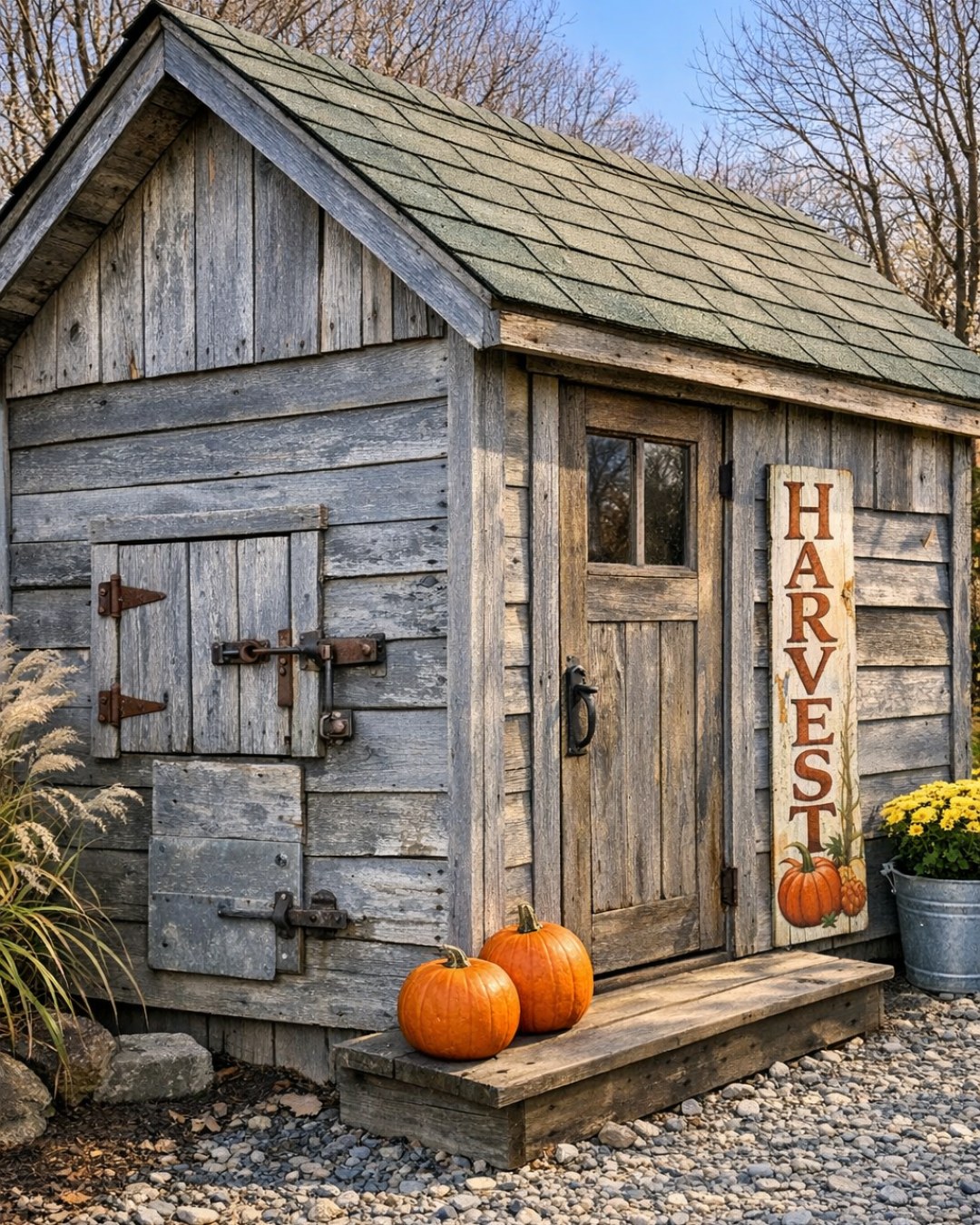
From the outside, the home keeps the humble outline of the original coop, and that restraint is exactly what gives it charm. The structure is compact and elongated, clad in aged vertical wood siding that has been restored rather than replaced, so you still read the grain, knots, and slight irregularities that tell the story of years spent out in the weather. A soft whitewash lifts the old boards without erasing them, while darker trim in a muted barn red or soot-black grounds the form and nods to working farm buildings across the Midwest. The roof, likely standing-seam metal in a weathered charcoal, adds crispness and durability, and I can just imagine how handsome it would look under a light snow or a spring rain.
The entry is simple but thoughtful, with a small stoop, a solid plank door, and just enough room for a pair of boots and a galvanized planter full of herbs. Windows are placed carefully, not generously, which suits the building’s origins and makes the interiors feel all the more intimate. A gravel path, native grasses, and perhaps a split-rail fence complete the scene without turning it into a stage set. It feels real, rooted, and deeply connected to the land around it, the kind of place that belongs to its surroundings instead of competing with them.
Living Room
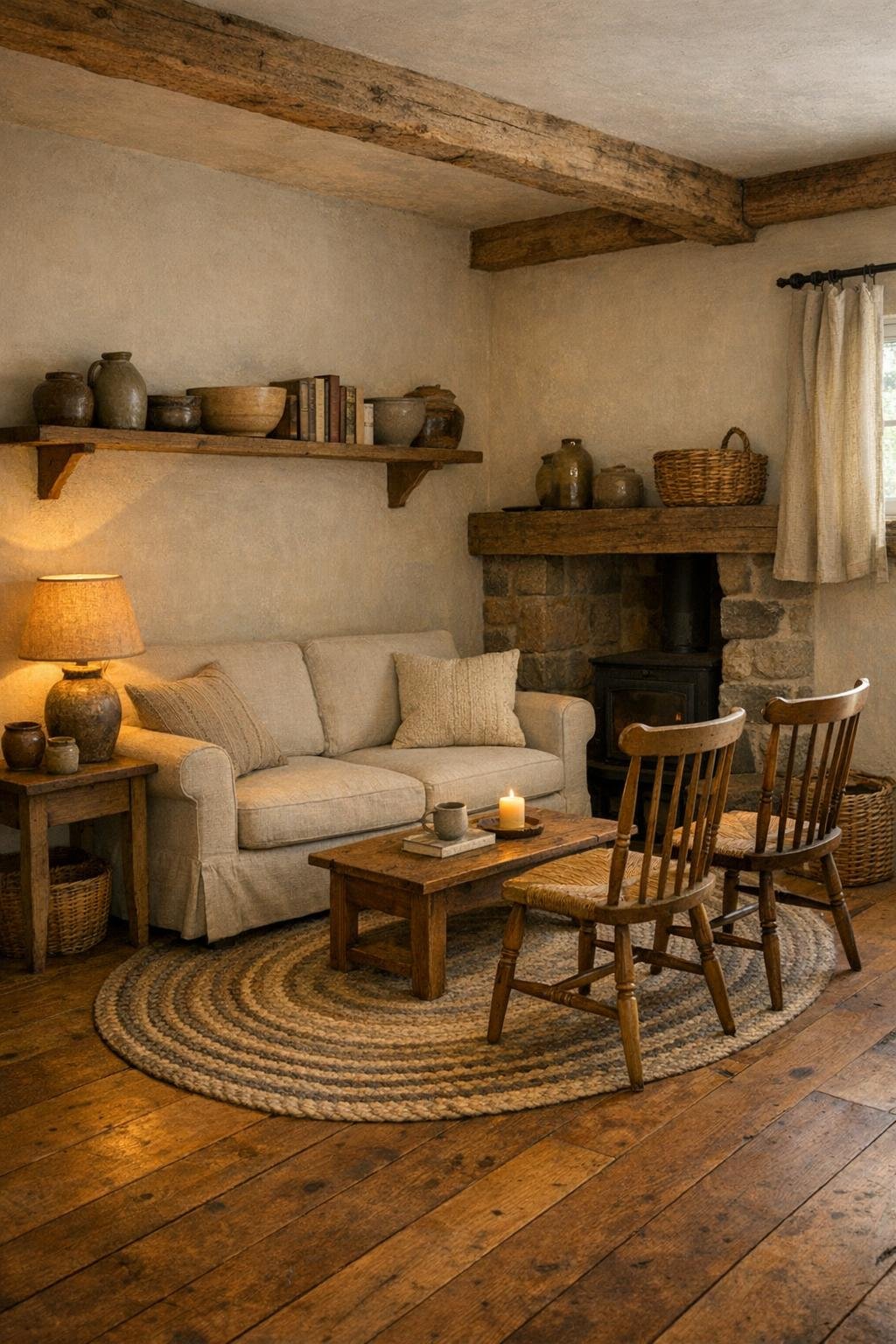
The living room is modest in size, but it has a settled, comfortable presence that reminds me of old family farmhouses where every chair was pulled close for conversation. A small seating arrangement fits beneath the slope of the ceiling, anchored by wide-plank wood floors in a warm honey-brown tone and painted walls in a creamy oat color. The furniture is scaled carefully for the footprint: a compact linen sofa, one or two spindle-back accent chairs, and a sturdy wooden coffee table with softened corners and a hand-rubbed finish. Nothing feels crowded because the palette stays quiet and the pieces have breathing room.
Texture does a great deal of the decorating here. A braided wool rug, a quilt folded over the sofa arm, and simple cotton curtains lend softness against the older architectural shell. Lighting is layered in a way I always appreciate in a small home: a modest ceiling fixture for ambient glow, a reading lamp near the chair, and warm spill from the kitchen beyond. Shelving may be built into a former recess or along one wall, holding books, pottery, and a few framed family photographs. The overall mood is calm and deeply livable, less about display and more about the comforting ritual of sitting down at day’s end.
Dining Room
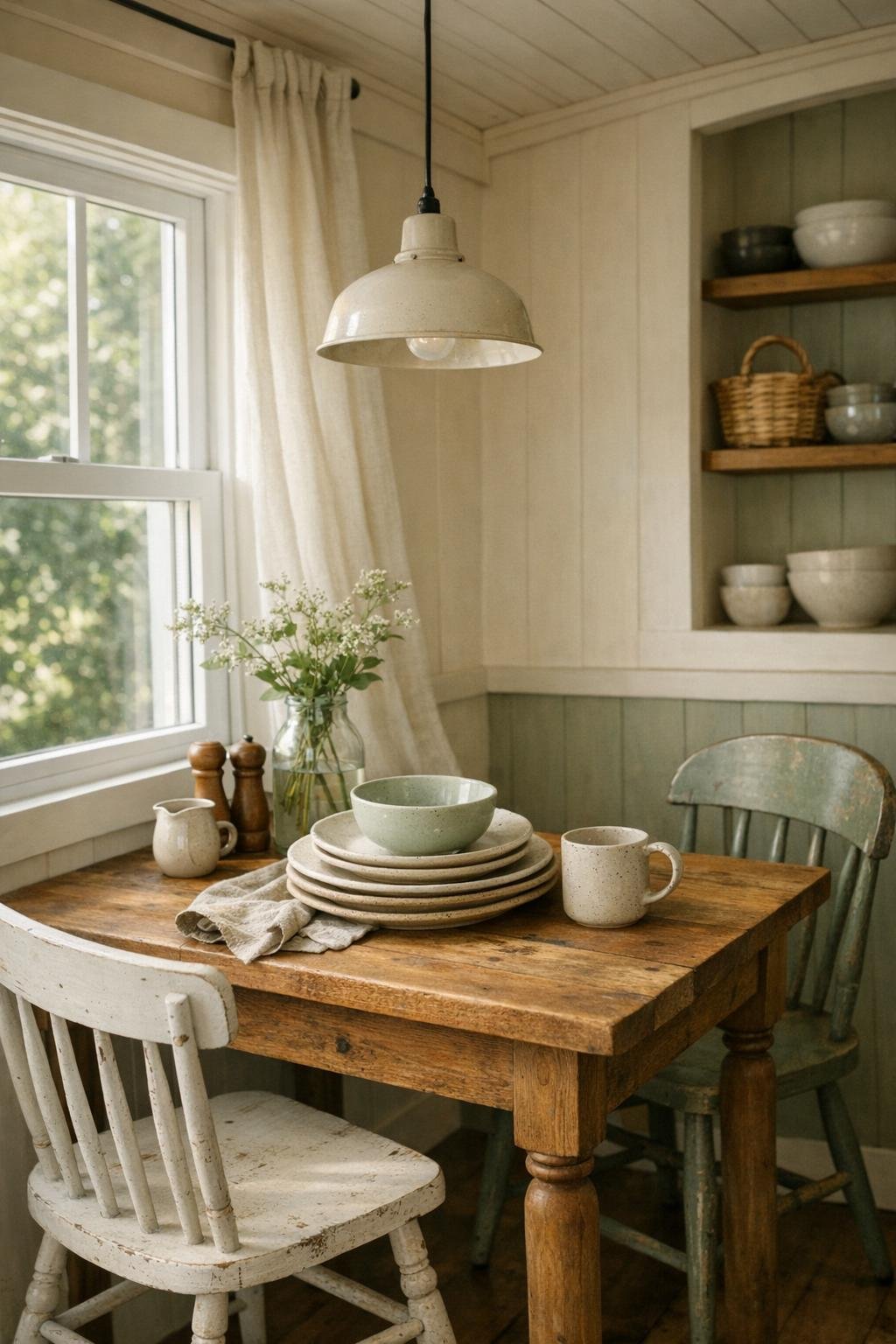
The dining area is likely woven right into the main living space, and that closeness gives it the warm feeling of a home where meals are the center of the day. Instead of a formal separate room, I picture a small rectangular farmhouse table tucked beside a window, with enough space for two to four people and not an inch wasted. The table would be solid wood, perhaps maple or oak, with a matte finish that can handle everyday use, while mismatched vintage chairs keep things relaxed and personal. It is the sort of setup that invites biscuits with soup at noon and a deck of cards after supper.
What makes the dining space memorable is not grandeur but atmosphere. Light from the window falls across the tabletop and catches the worn edges of the chairs, while a single pendant above brings the eye down and makes the area feel gently defined. A narrow shelf or sideboard nearby might hold stacked stoneware plates, a crock for wooden spoons, and a small vase with field flowers. The colors remain tied to the rest of the house—cream, weathered wood, muted green, and touches of rust—so the whole room feels stitched together like a favorite quilt.
Kitchen
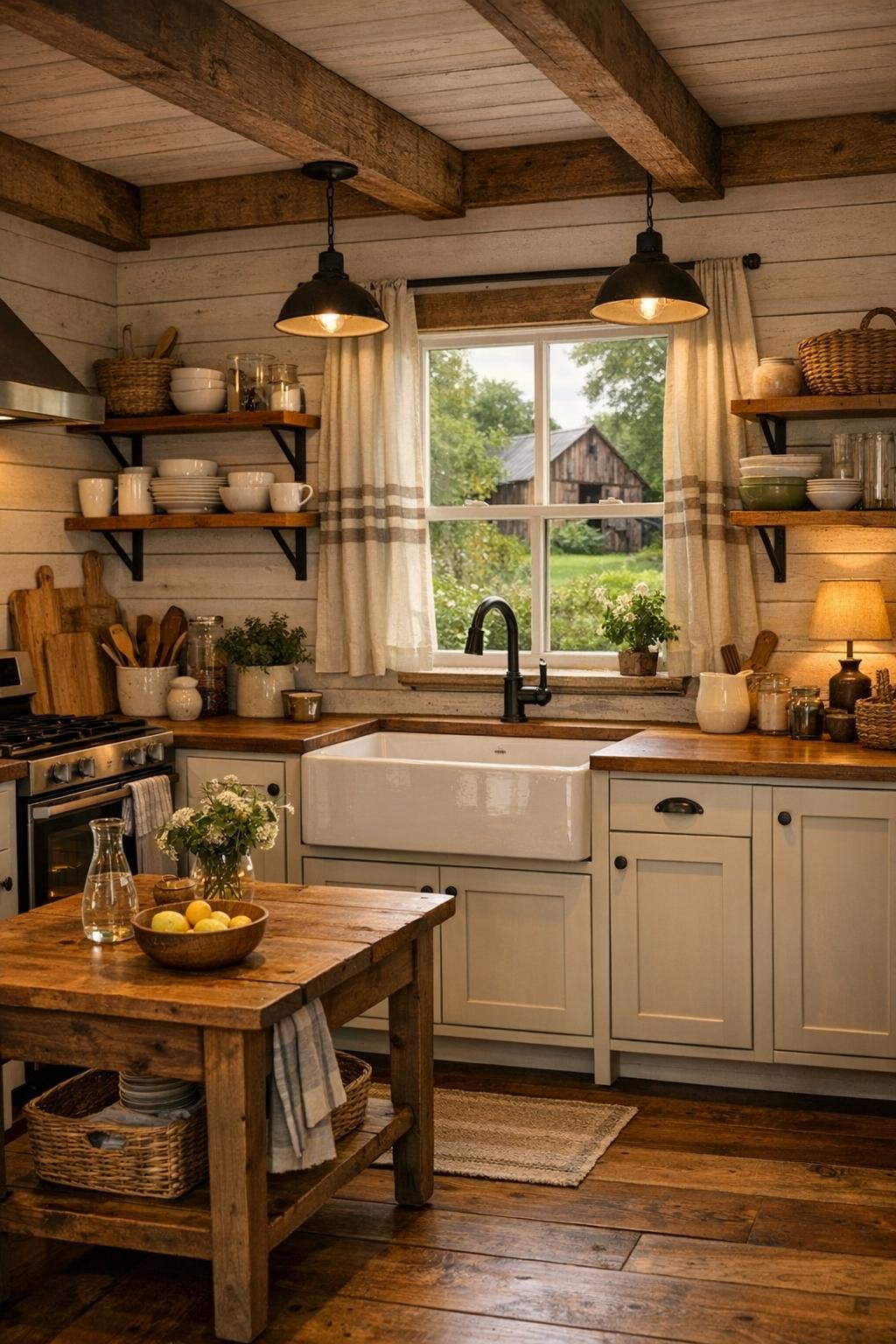
This is the heart of the home, and truly the reason the whole place sings. For a tiny house kitchen, it would feel remarkably generous because the layout respects how real cooks move: plenty of uninterrupted counter space, easy reach between sink, stove, and storage, and cabinetry that goes vertical without feeling oppressive. I imagine shaker-style cabinets painted a dusty sage or warm cream, paired with butcher-block counters that add a handsome, work-ready warmth. Open shelves break up the upper wall line and display everyday dishes, mixing bowls, jars of dry goods, and maybe a few old enamel pieces that look as though they have earned their place.
The best kitchens, in my experience, do not just look pretty; they anticipate life. Here, a deep apron-front sink sits under a window, a proper range anchors one wall, and a narrow island or butcher-block worktable offers extra prep room along with a spot to roll pie crust or knead bread. Under-cabinet lighting brightens the work surfaces, while metal hardware in aged brass or blackened iron adds contrast without fuss. A beadboard backsplash or painted wood paneling would suit the coop-turned-cottage spirit beautifully. The whole space feels efficient, bright, and deeply personal, the kind of kitchen where supper comes together from memory and instinct, and where staying small never once means giving up pleasure.
Bedroom
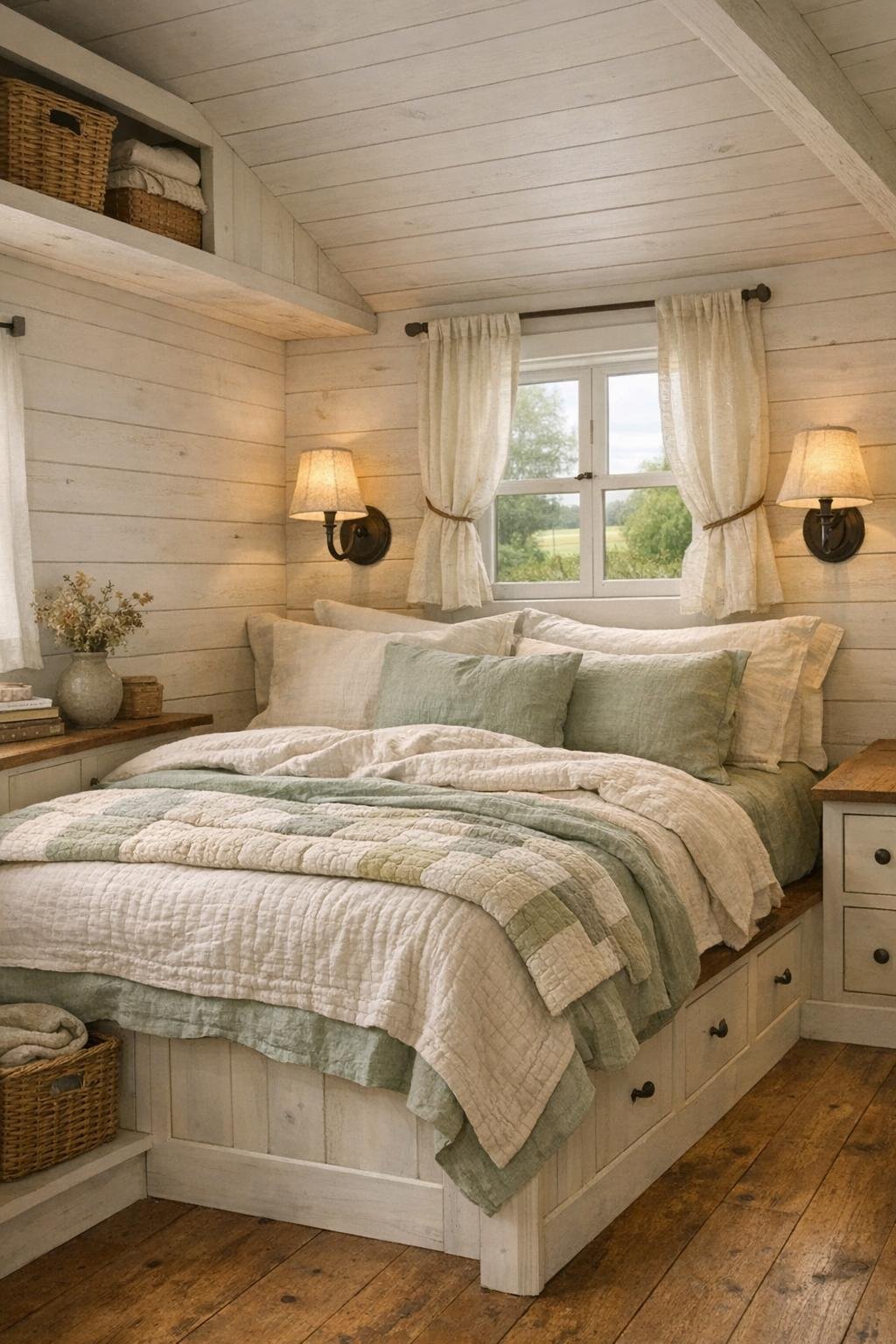
The bedroom is likely simple and compact, but that simplicity is part of its grace. I picture it wrapped in soft, restful tones—creamy whites, faded flax, and the palest gray-green—with natural wood continuing underfoot to keep the house feeling cohesive. A modest bed with an iron or wood frame takes center stage, dressed in layered linens, a stitched quilt, and perhaps one nubby wool throw folded at the foot. Because storage is always precious in a tiny home, built-in drawers beneath the bed or a wall of shallow cabinetry would help the room stay tidy without sacrificing warmth.
There is something especially lovely about a small bedroom that does not try to be anything but restful. A pair of sconces instead of lamps saves surface space, and a narrow ledge or petite bedside table holds only the essentials: a book, reading glasses, a glass of water. If the old coop structure allows for exposed rafters or an angled ceiling, those details would make the room feel cocooning rather than confined. It is easy to imagine waking here to soft morning light and the hush of the countryside, with no clutter to distract from the peace of the place.
Bathroom
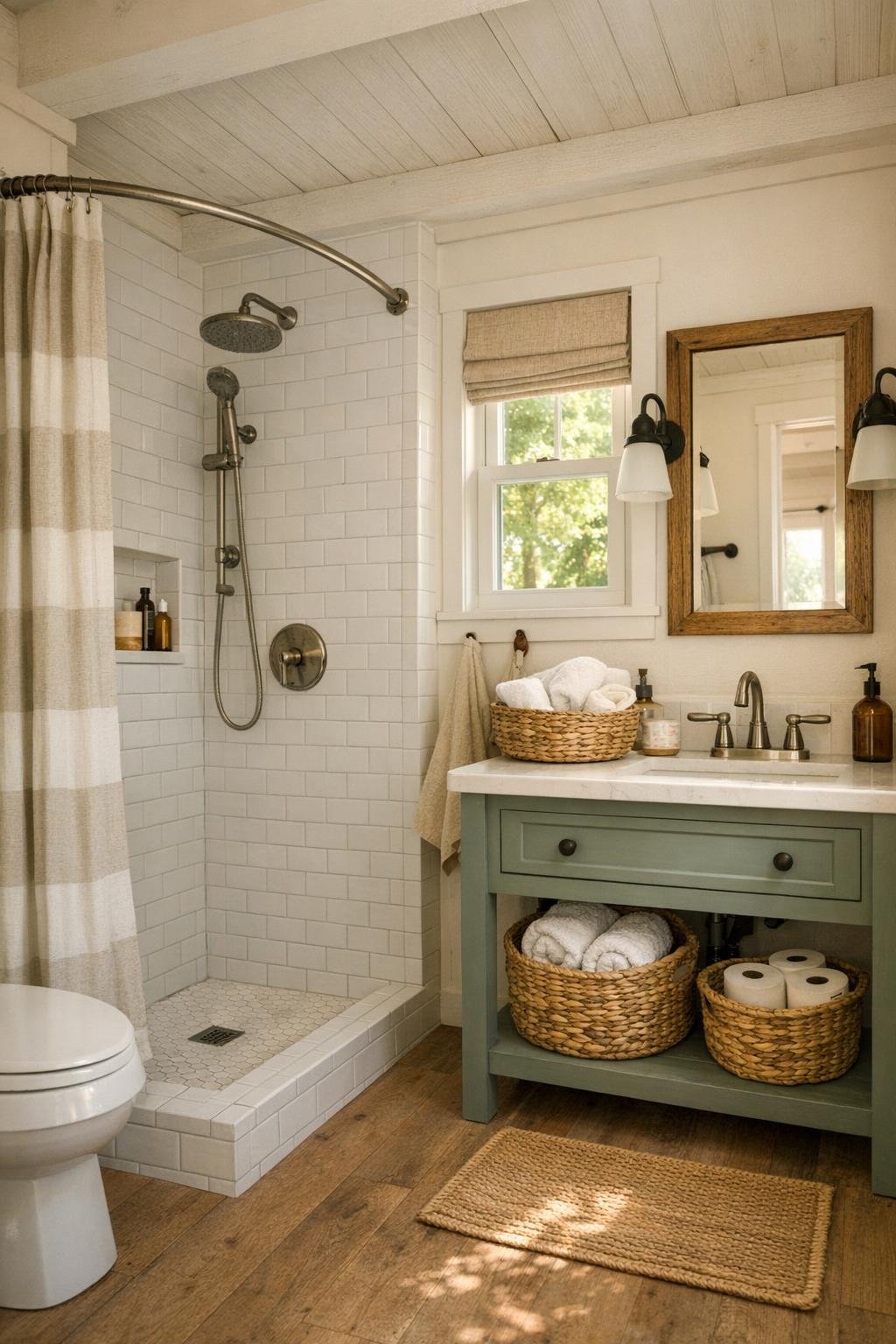
The bathroom carries the same sensible beauty as the rest of the home, proving that utility can still feel gracious. I imagine a small footprint handled with care: a walk-in shower with simple white tile, a glass divider to keep the sightlines open, and a classic vanity in painted wood topped with a durable stone or composite counter. If the designers wanted to echo the building’s agricultural past in a subtle way, they might use peg rails, a metal-framed mirror, and old-fashioned hooks rather than anything too polished or precious. The result would be clean, bright, and unfussy.
Materials matter enormously in a room like this, especially in a tiny house where every surface is close at hand. Soft matte finishes, brushed metal fixtures, and pale grout keep things fresh without turning sterile. A small window would bring in daylight and a bit of the landscape, which always makes a bathroom feel more humane to me. Towels in oatmeal, faded blue, or moss green would add a gentle lived-in note, while woven baskets underneath the vanity could store everyday necessities. It is a hard-working space, yes, but one that still manages to feel quietly restorative.
Other Areas
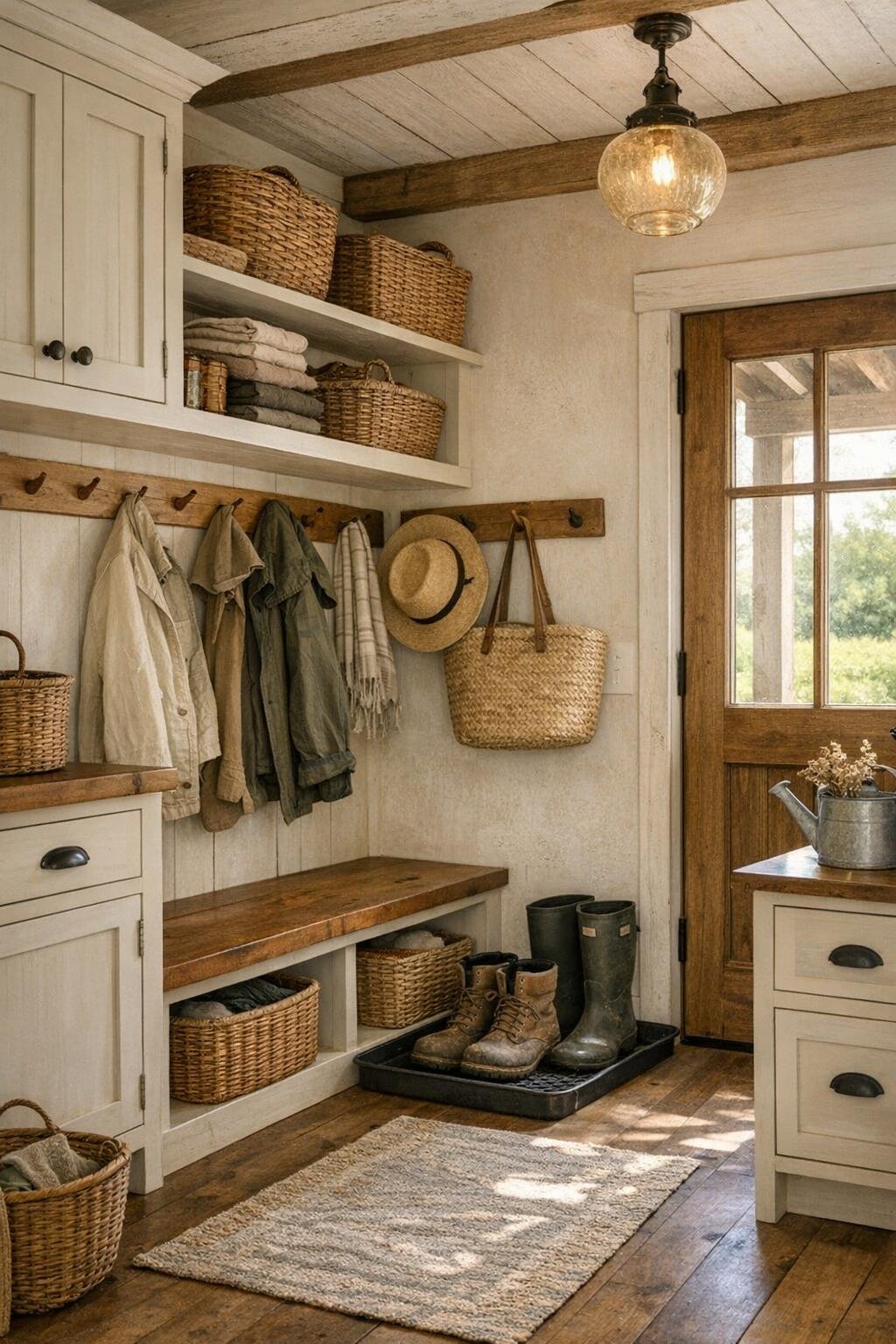
In a home this size, the in-between spaces matter just as much as the main rooms. A narrow entry nook might include pegs for coats, a bench with hidden storage, and a boot tray that acknowledges real country living. Hallways, if there are any at all, are kept minimal, with every transition doing double duty. I can also imagine a lofted storage area tucked under the roofline, or a cozy reading corner carved beside a window where the light is best in late afternoon. These little moments are what give a compact home its richness.
Even the practical zones would be handled with charm. A stacked laundry closet hidden behind paneled doors, open shelving for pantry overflow, or a built-in desk for letters and recipes would make daily life easier without disturbing the home’s quiet rhythm. If there is a back door leading out to a small patio or garden patch, that connection would extend the living space beautifully in warmer months. In my mind, every overlooked corner has been asked to contribute something useful and something lovely, which is often the secret to making a tiny home feel abundant.
Why You'd Live Here
You would live here if you believe a home does not need excess to feel complete. This place offers the pleasures that matter: good light, hardworking materials, rooms scaled for real living, and a kitchen designed for someone who truly cooks. It honors the past without becoming trapped in it, and that balance is harder to achieve than people think. For a retired couple especially, it feels like a thoughtful answer to a new chapter—smaller, yes, but also freer, easier, and more intentional.
To me, the real appeal is emotional as much as aesthetic. There is humility in the old coop shell, comfort in the farmhouse details, and dignity in the careful reuse of something once purely practical. It suggests a life pared down to what nourishes: a warm meal, a familiar chair, morning light through the window, and enough room for the things that carry memory. That is the kind of luxury I understand best, and this tiny home delivers it with grace.