
At first glance, this faded cream converted bus has the quiet, road-worn charm of something that has already lived a few good lives. Parked in a peaceful natural setting and reimagined with a soft, welcoming hand, it blends vintage character with the kind of thoughtful comfort that makes a small home feel generous. This concept design leans into warmth instead of novelty, and that is exactly what makes it memorable to me.
What I love most here is the balance between practicality and personality. The narrow footprint is handled with real care, using light wood, creamy paint, built-in storage, and layered textiles to create a home that feels calm, useful, and deeply personal. It has the coziness of a family retreat, the ingenuity of a tiny house, and just enough rustic polish to make every inch feel intentional.
Exterior
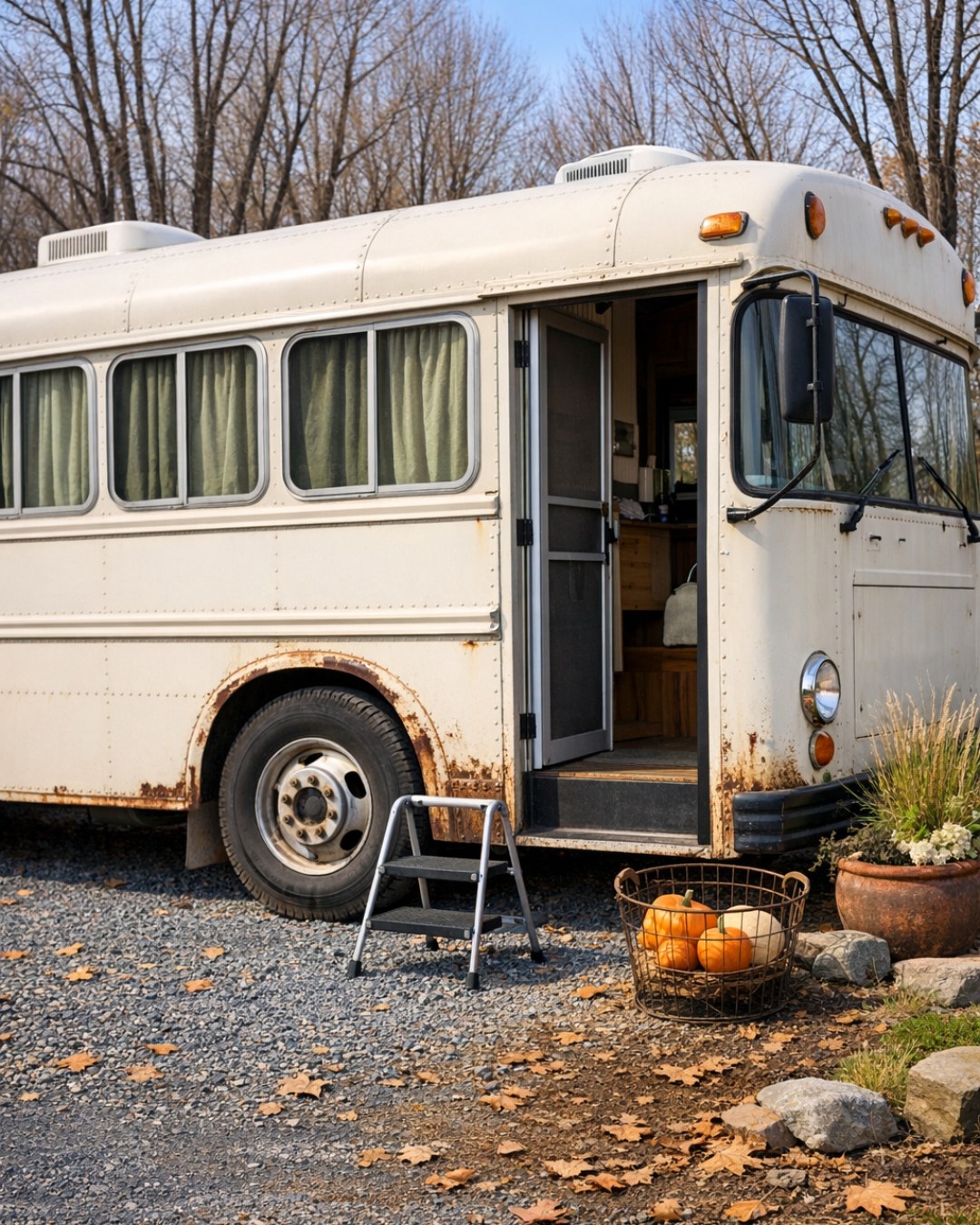
The exterior keeps much of the bus's original silhouette, which gives the home its unmistakable identity, but the faded cream finish softens that utilitarian shape into something approachable and almost storybook-like. I can picture it catching the late afternoon light beautifully, with the slightly weathered paint adding texture rather than looking neglected. Small updates, like refreshed window trim, simple lighting, and tidy landscaping around the parking spot, help the bus feel grounded and cared for without stripping away its past.
What makes the outside especially appealing is its restraint. There is no overdone makeover here, no glossy attempt to hide what the structure once was. Instead, the design lets the rounded edges, long horizontal lines, and compact proportions speak for themselves. It feels humble in the best way, with a front entry that invites you in gently and promises that the real surprise is waiting inside.
Living Room
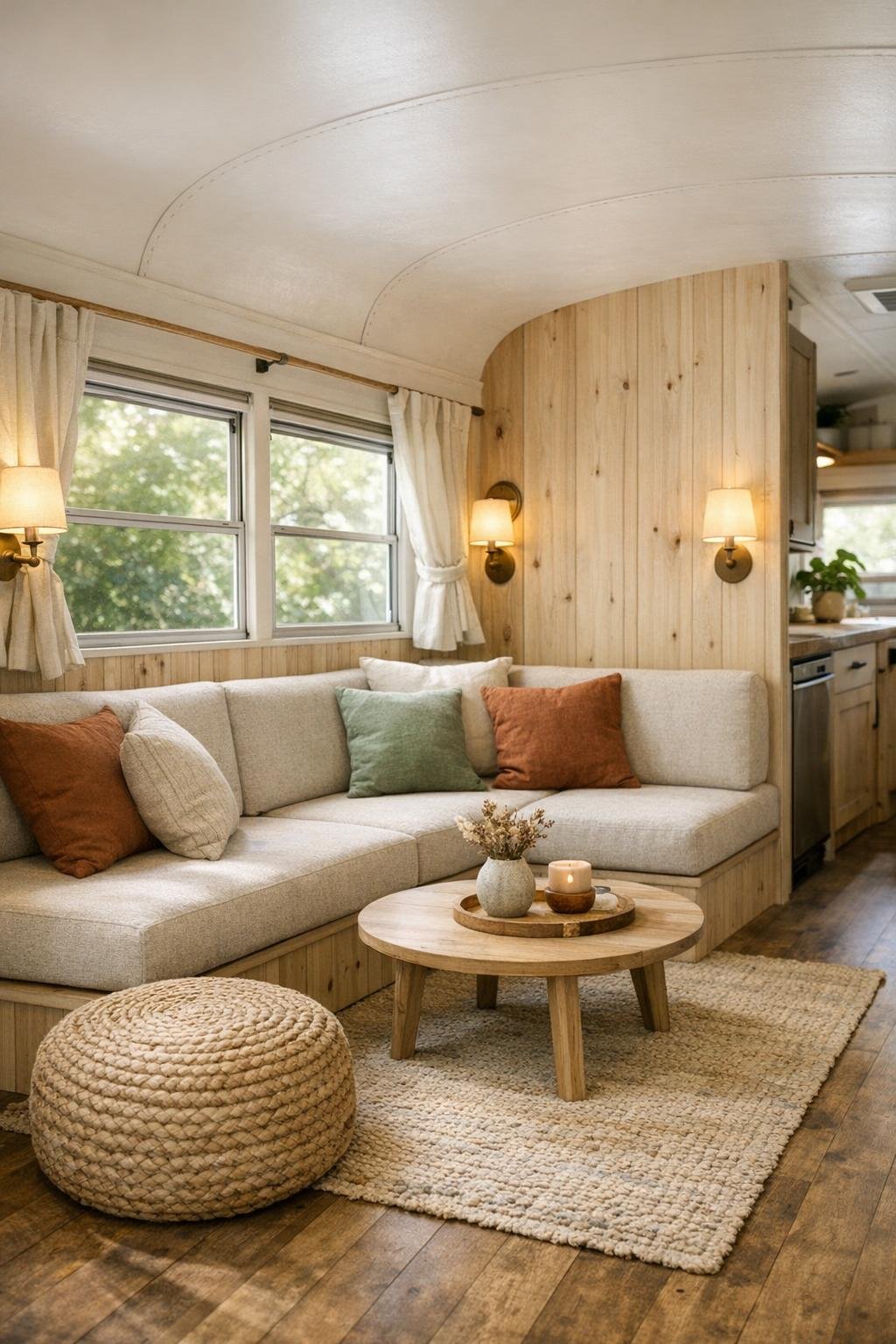
The living room is a lesson in how to make a compact space feel nurturing. A built-in bench sofa runs along one side beneath the windows, upholstered in a durable oatmeal fabric and layered with cushions in soft clay, sage, and muted rust. The palette feels earthy and easy on the eyes, and I especially appreciate the way the natural light would bounce off pale wood paneling and creamy walls, keeping the room from ever feeling boxed in. A small round coffee table and a woven pouf add flexibility, which is always a smart move in a home where every square foot needs to earn its keep.
There is also a family-minded practicality here that I instantly notice. Storage is tucked below the seating, open shelves hold books and simple ceramics, and the lighting is soft rather than fussy, with warm sconces and a compact ceiling fixture that keep the mood relaxed in the evening. If I were settling in here with my kids after dinner, I would add a basket for blankets and a tray for cocoa mugs, because this room really invites those small rituals that make home feel special.
Dining Room
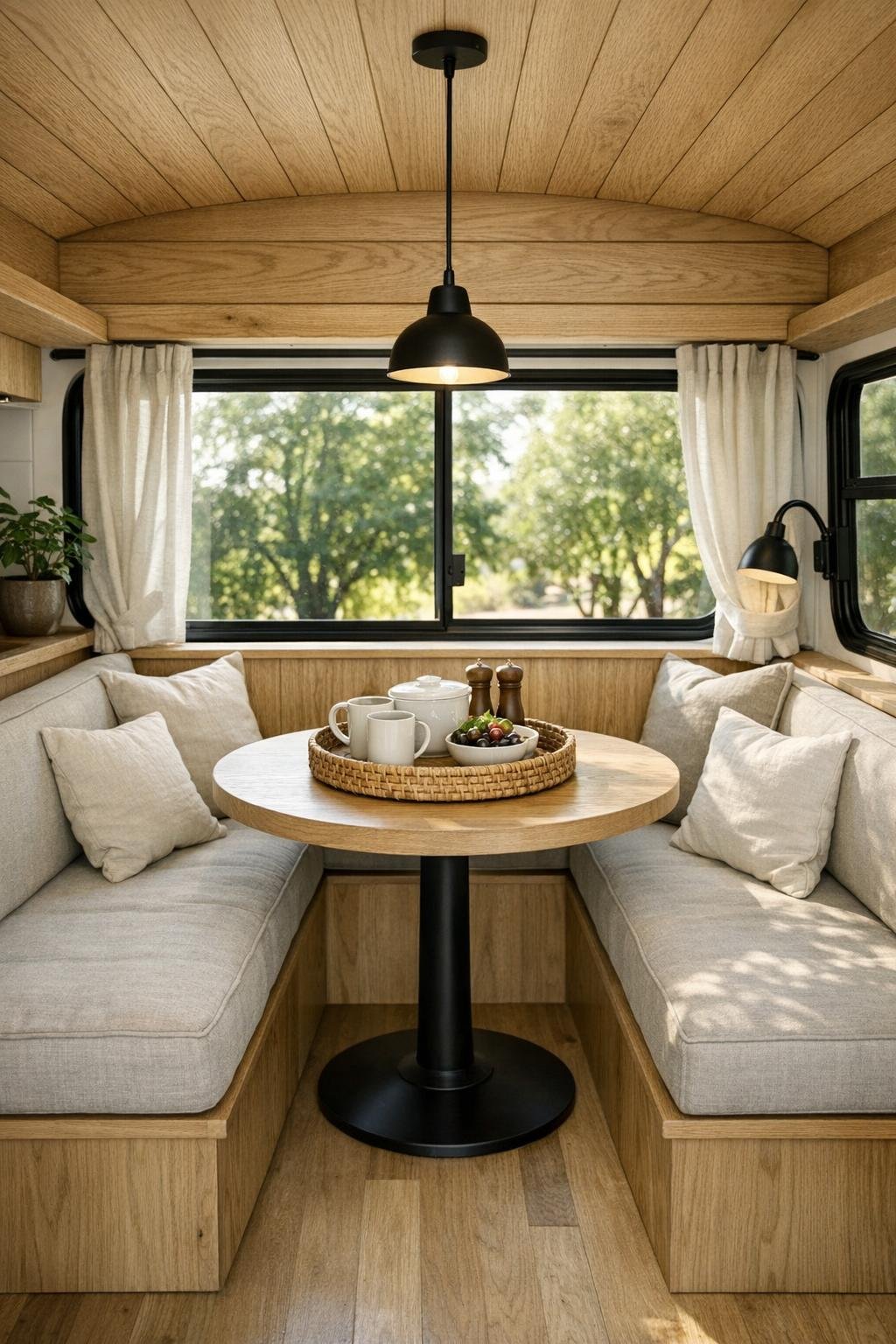
The dining area is compact, but it has all the heart of a much larger home. A slim built-in banquette paired with a pedestal table makes the most of the bus's narrow width, and I love that this setup encourages people to gather close and linger. The finishes are simple and tactile: light-stained wood, linen seat cushions, matte black hardware, and a tabletop that looks sturdy enough for pancake breakfasts, homework, or a board game after supper. It is the kind of space that works hard without ever feeling purely functional.
Because I spend so much time thinking about meals and how families actually use a home, this little spot stands out to me. The windows keep it cheerful, and a petite pendant overhead gives it a defined sense of place, almost like a tiny dining nook in a cottage. For picky eaters, I always think a cozy table helps; when a space feels comfortable and low-pressure, dinner can feel more inviting. This room understands that beautifully, wrapping everyday moments in warmth.
Kitchen
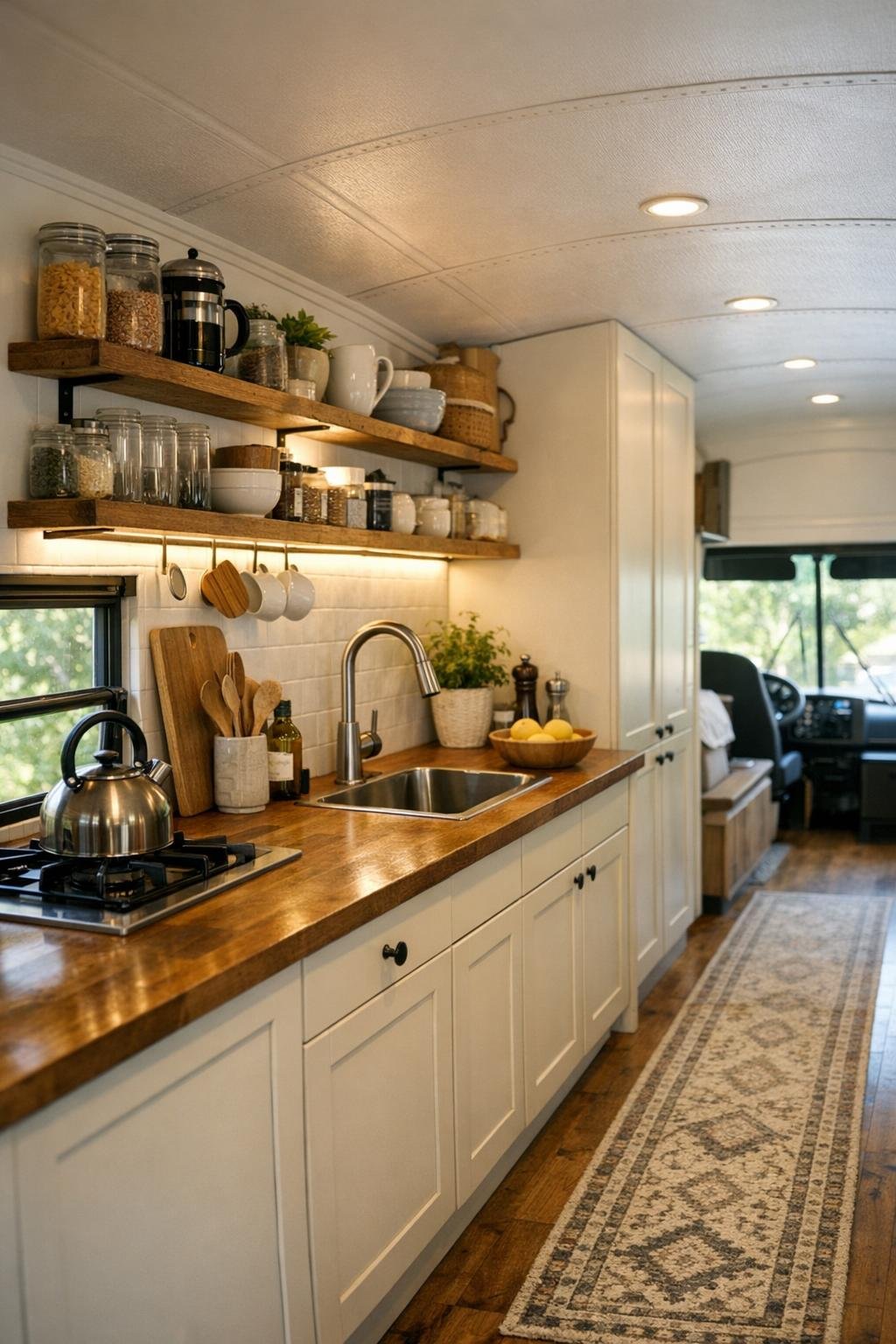
The kitchen is where this bus really wins me over. The cabinetry is likely kept flat-front and simple, painted in a creamy tone that blends seamlessly with the walls, while butcher block counters bring in warmth and a homey, hardworking feel. Open shelving keeps the upper half of the room airy, and I can easily picture neatly stacked dishes, glass jars, and a few everyday cooking tools within reach. A petite apron-front sink or a compact stainless model would both feel right here, especially paired with brushed brass or black fixtures for a little contrast.
Even in a smaller kitchen, the layout appears designed for real cooking, not just looks. There is enough counter space for chopping vegetables, assembling lunches, or setting out toppings if you are feeding people with different tastes, and as a parent I always notice details like that. Under-cabinet lighting, a narrow runner rug, and smart drawer storage make the room feel polished but still very lived in. It is efficient, yes, but also sweetly inviting, the kind of kitchen that says soup can simmer here, bread can toast here, and somebody is always welcome to pull up close and chat.
Bedroom
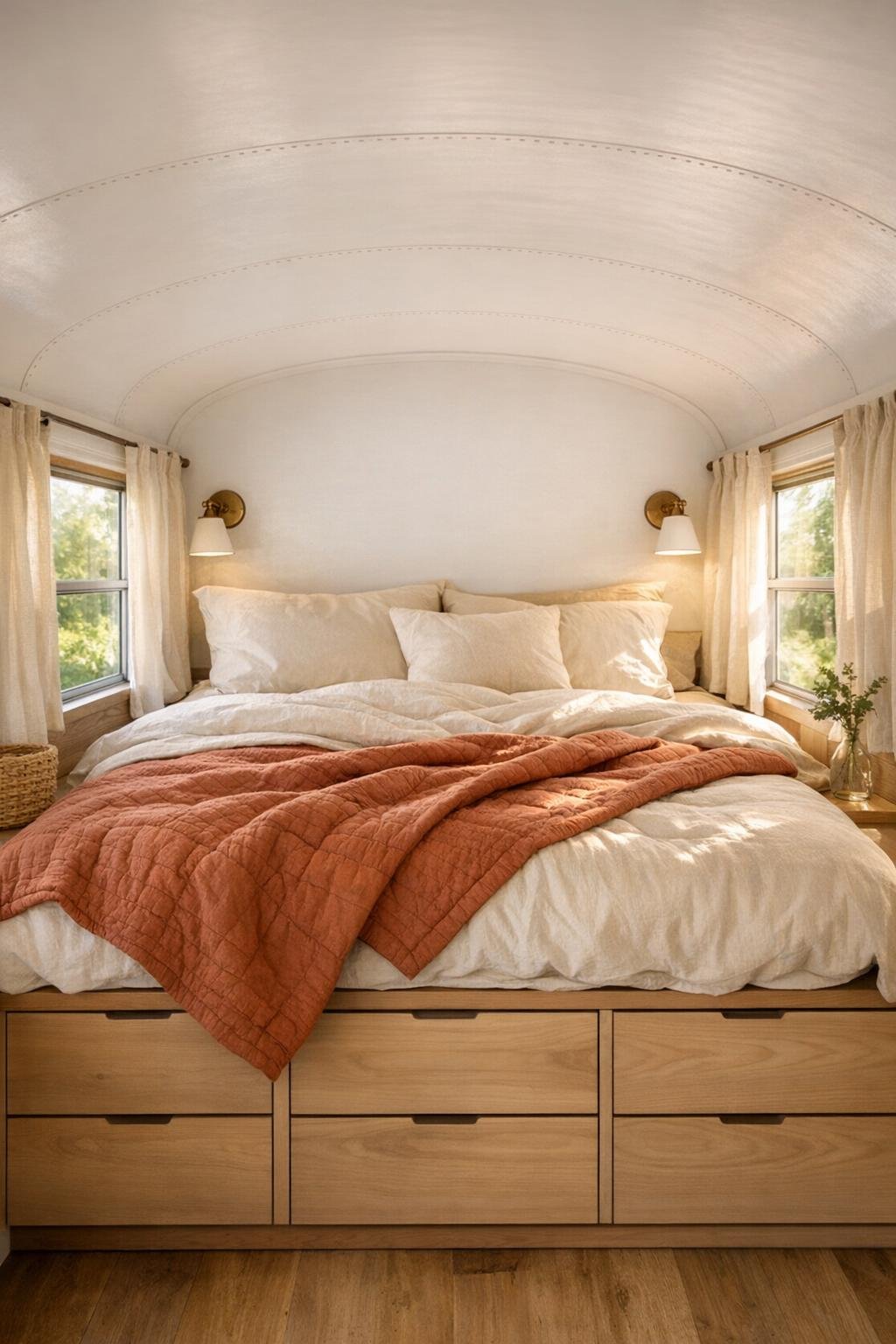
The bedroom carries the same soft, settled mood as the rest of the bus, but with a slightly more cocooning feel. A built-in bed platform makes the most of the available width, likely wrapped in light wood with drawers below, and the bedding is where I would expect the design to get especially inviting: crisp cream sheets, a quilt in dusty terracotta or sage, and a few layered pillows for comfort without clutter. Windows on either side keep the room from feeling enclosed, and gentle curtains add privacy while softening all those practical lines.
What makes this bedroom so appealing is that it does not try too hard. There may be a small ledge instead of bulky nightstands, a reading sconce on each side, and just enough decor to feel personal, perhaps a framed landscape or a tiny ceramic vase. In a home this size, a restful bedroom depends on discipline, and this one seems to understand that calm comes from editing. The result is simple, quiet, and wonderfully restorative.
Bathroom
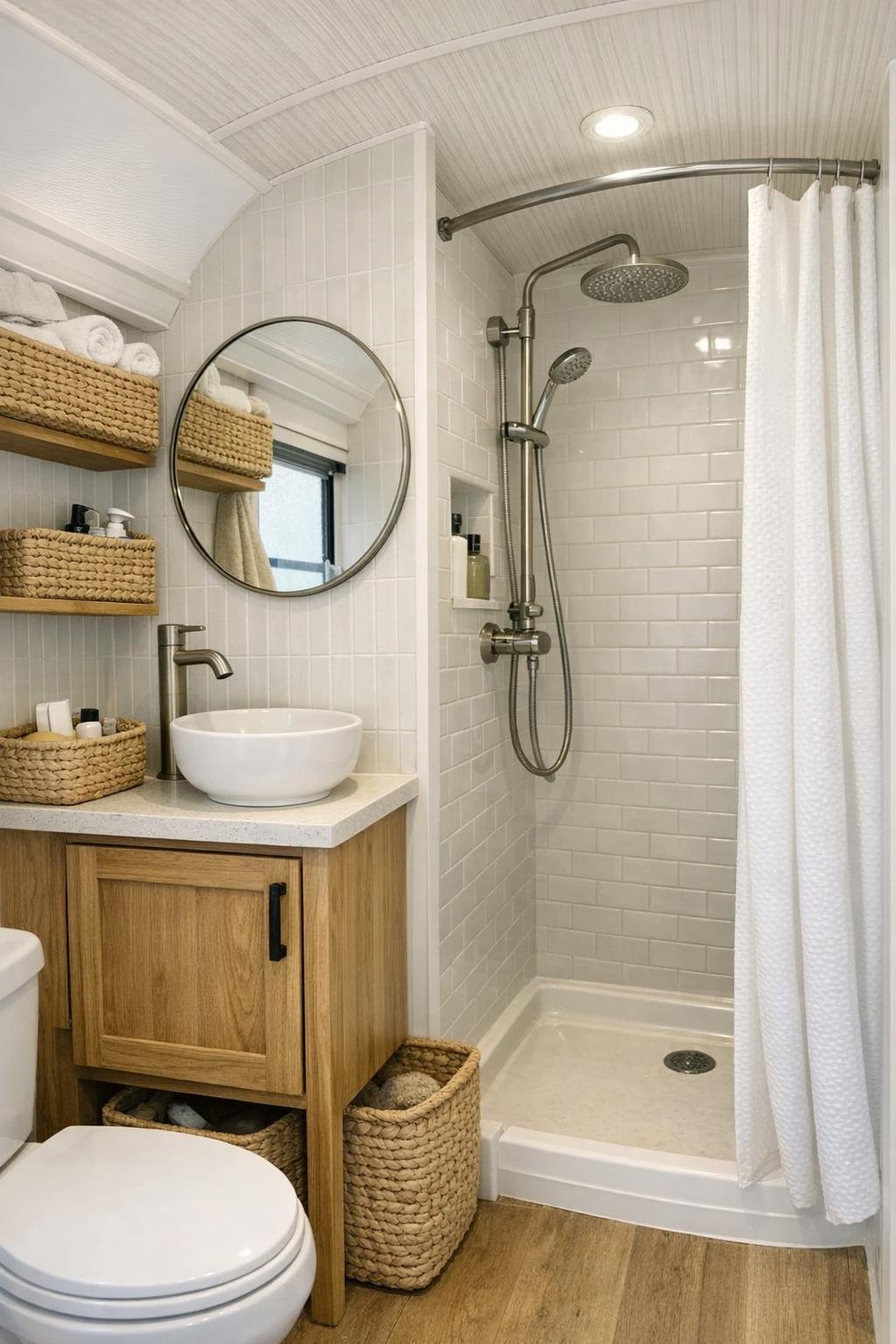
The bathroom is small, of course, but thoughtfully finished so it feels clean and composed rather than cramped. I imagine vertical tile in a soft white or warm greige, a compact vanity in natural wood, and a simple round mirror that bounces light around the room. In a narrow bus layout, every finish matters, and here the combination of reflective surfaces, pale tones, and streamlined fixtures would do a lot of work to make the room feel brighter and more open.
I also like when a tiny bathroom includes a few touches that make daily routines more pleasant, and this one seems ready for that. A niche for bath products, hooks instead of bulky bars, woven baskets for towels, and perhaps a small window for ventilation all help the room function beautifully. If I were advising a family using a space like this, I would say keep a small caddy for each person and let the design's simplicity do the rest. It already has the ingredients for feeling fresh, easy, and surprisingly serene.
Other Areas
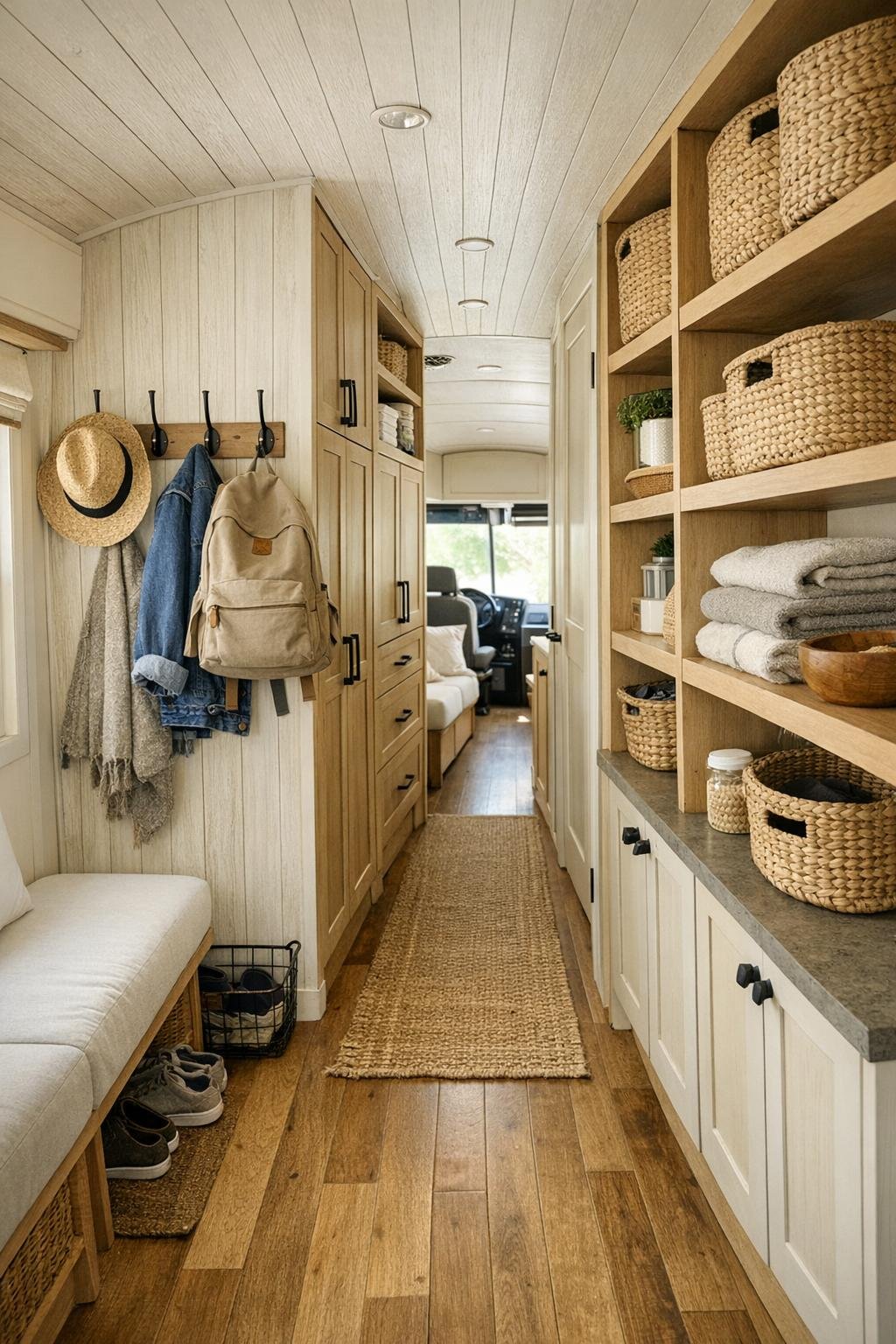
In a bus conversion, the in-between spaces are just as important as the main rooms, and this home handles them beautifully. Hallway stretches are likely lined with smart cabinetry, narrow shelves, or hidden compartments that turn awkward dimensions into useful storage. Even the entry probably works harder than it looks, with a spot for shoes, coats, or market bags. I always appreciate when a compact home remembers real life, and these transitions seem designed for exactly that.
There is also a gentle continuity from one zone to the next that helps the whole interior feel larger. Repeating the same pale wood, creamy paint, black accents, and soft textiles keeps the eye moving easily through the bus, while little decorative moments, such as hooks, baskets, and a plant or two, prevent it from feeling overly spare. These secondary areas are where good small-space design really proves itself, and here they help the home feel complete rather than compromised.
Why You'd Live Here
You would live here because it offers something many larger homes miss entirely: clarity. Every finish, every built-in detail, and every carefully chosen texture supports a slower, more intentional way of living. The bus keeps its original personality, but the interior softens it into a home that feels welcoming, capable, and full of heart. For anyone drawn to small-space living, that blend is hard to resist.
I also think you would live here because it understands that comfort is not about square footage. It is about having a place for morning coffee, a table for shared meals, a kitchen that makes cooking feel joyful, and a bedroom that helps you truly rest. This converted bus manages all of that with grace, and to me, that is what makes a home worth a second look.